 Ah, so nice to write about progress... Just finished a data analysis project, sent the processed data to the main researcher and even though the actual statistical analysis is still ahead, he will be doing most of that. It was a long night but now it's done!
Another phew is that the Cambridge Open Days are now over. I did a shift at the faculty stand in the fair, trying to answer the questions prospective undergraduates (or mainly their parents) had about the course, life in Cambridge etc. It was a bit difficult to relate to their situation, because it's been so long since I was there, trying to decide what degree course to aim for. I had no clue what my course would lead into, and nobody could have foretold my path from there to here. I tried to be neutral and answer the questions by giving as much information as possible, even though I felt like telling the kids that they should just follow their heart, start doing what sounds good and change if it sucks. And for the parents that they shouldn't worry about their kids' future employment so much. All in due course, they need to grow up first. And figure out what it is they want. Might take a while, I still don't know.
By far the most common question was "which college is the best". This, obviously, is impossible to answer: they are all different, all good in their own ways, all bad in some others. One of our faculty members gave good advice: walk around and choose the one whose buildings you fall in love with.
(Pic: Marc Hairston UTD)
Saturday, July 08, 2006
Phew!


Friday, July 07, 2006
Kissing
 Is it the hot weather? World leaders have been kissing around lately like there's no tomorrow. Putin had to explain his behaviour in an interview staged by BBC and Yandex.ru. A huge amount of people who sent in questions to be asked of The Czar and who voted for their favourite questions, preferred to know why he kissed a little boy to the tummy rather than engage in any boring poli-talk about Chechnya or Iraq etc. They got an answer: he just wanted to caress him like a kitten. Sweet...
 The art of kissing babies is important for politicians, it shows that they are not cold technocrats but warm, loving human beings. GWB seems to master this part of politics equally well as all other domains of political life.
You could argue that Prezza doesn't really qualify as a "world leader" anymore, since he has been stripped of most of his powers. Even as a high-salaried and fancy-titled serial government committee chairman, he seems to explode a political mine on every step he takes. Not a timebomb, nor a dead man walking, but something like a cluster bomb rigged with an egg-timer. He made kissing-gestures to the photographers upon his return from the latest scandalous trip to visit Mr. Anschutz's ranch in the US. "Prescott kiss" still has another meaning, though... I actually feel sorry for the guy. He is a talented politician, and recreates English language every time he uses it (this is not necessarily a good thing, but admirable nevertheless). And he's been bullied. It seems to me that the biggest sin in his trip to play cowboys and indians wasn't the fact that he went to visit the guy who's applied for one of the few super casino licenses that the government is about to deal out, but the fact that it wasn't a one way trip.
The press keeps hitting him, just to see him stand up again and take another blow. It's no longer about making a point or initiating change: he will kiss his political career goodbye by the next election. It's just to have a go at the easy target, in a rather cowardly fashion. The fuss is made about relatively small things. There'd be more important topics to discuss, but perhaps it's the summer heat melting all the journalists' brains as well.
(Pics: RTR, BBC/AFP, Guardian)
Thursday, July 06, 2006
EU - baaad, prejudice - goooood
 The new Eurobarometer was published today. According to the survey, Finns are the most eurosceptic people in EU, with 26% thinking Finnish membership in the EU is a baad thaang. Britain and Austria take the other places on the dubious podium. The fieldwork for this was done in April, so at that point the previous, current and future presidency-holders were holding the hats of top-sceptics in the survey.
Does this say something about the leadership crisis of the Union? The countries holding the presidency should be driving the union forward - legislative processes, reforms, constitution etc., as they have some control over the agenda of the meetings, and by preparing and chairing them can influence the outcomes by setting targets and committing to work towards them. One of the major arguments for rotating precidency is that when every member state is in charge in its turn, this gives everyone in the union the reassurance that they can influence the future of EU, which is often seen as a bureaucratic behemoth. So, while the elected political officers in the member states take their turn on the driving seat, they should be able not only to push the Union forward but also gain support for the project in their own electors. Deferred success on both counts, if the Eurobarometer is to be believed.
There are other factors, such as lack of definition of "forward" in the Union at the moment, which of course is not a small deal. Also, having a highly critical electorate to begin with doesn't encourage the political leadership to take leading roles on the European stage - if the people who vote for you see keeping things in a standstill as the best way forward, no amount of European pressure will make you behave otherwise. Unless you want to end your final term in office with a bang! Or at least a crash.
I have very modest expectations for the Finnish presidency. I expect everything to run smoothly in terms of organising the meetings etc. The civil servants who carry the weight of the organisation and run much of the backstage diplomacy will be top notch. But, the lack of vision and reluctance to take risks is a defining trait of the current government coalition, and this is especially clear in foreign policy. Especially with the parliamentary elections looming in March 2007, it will be low profile all around - management, not leadership. The current govt defines "forward" as "hopefully not going backwards too much". Most of the sorely needed reforms in Finland have been ground to a halt by the current government, by setting up an infinite number of committees and steering groups and commissioning an endless stream of reports and studies. I have nothing against proper background research, but when you commission a new study on an issue where the previous study with practically identical mission was published in 2005 rather than getting on with the damn legislation, there is something fundamentally wrong in the way these people see their role as leaders.
Why are Finns so Eurosceptic? We get a fair share of the structural funds, have done good work in using them, and altogether in financial terms the membership doesn't cost us all that much. The access to the European market has benefited our businesses, helped people to travel, study and work abroad. We have even gained some self-confidence from being a part of a "Western", European club instead of having to repeatedly tell everyone we are NOT part of the Soviet bloc.
Well, take the recent "survey" or a webpoll in a Finnish tabloid: they wanted people to tell them things that were better before the EU membership. OK, but you never see any polls, stories or discussion of the things that are better with the membership. These are branded as propaganda. It's no news that people are always nostalgic for the past, and running these kinds of polls just taps into the simplest fallacy in research: correlation does not imply causation. Asking people to list things that were better 10-15 years ago compared to how things are now will provide you a list of things; from people missing certain trademarks to longing for those warmer summers and more snowy Christmases. Replacing the term "10 to 15 years ago" by the term "before the EU membership" will produce pretty much the same list, but this time EU becomes the culprit.
Just as I'm fed up with the mickeymouse soundbite science, I'm fed up with the unfounded "EU will forbid this and stop that" -stories. And the "polls" described above. They are irresponsible, as much as they are wrong. It tells a lot about the media who are ready to publish anything as long as they think their readership will enjoy the laughs. I think they knew what they were doing in the poll, it wasn't just their total ignorance of how public opinion and attitudes should be measured. But as they are at the same time twisting public perception of the European institutions and what they are for, I think it's sad and cheap.
Could we please move to the next level in the discussion? Not everything in EU is good, not everything that's been proposed by the commission, council or the parliament should be put forward. We need critical discussion, but not the kind of childish whining much of the public "debate" is at the moment. Will Germany deliver? MEP's? Anyone? Media? Ahh, you're all at the beach already. Well, we'll get back to it after the holidays. After all, Rome wasn't built in a day, although it seemed to be buried in one. Anyone for Pimms?
Tuesday, July 04, 2006
To hack or to overkill?
I feel so stupid, sometimes. Yes, it's about those experiments and building the setup. It's practically ready and done, but I still have a choice to make. Either to learn to use a piece of sound equipment properly, so that it can handle multiple inputs and multiple outputs. I need this so I can channel my different sources of stimuli through one piece of equipment and to two participants simultaneously. The gear I'm using would do that routinely, but I would need to make an effort on how to use the damn thing and change a number of settings and defaults.
My other option is to take two pieces of the same equipment and just use them in parallel, not having to worry about setting them up in any special way. We happen to have two of these £600 pieces of equipment that nobody else needs at the moment.
So, why don't I just jump in to the second option, why do I even bother thinking about the first? Well, because I feel so stupid about it. I keep imagining how it looks like in the write-up. The equipment section would be a ball. "For stimulus presentation, TWO units were used, mainly due to laziness of the experimenter to learn how to use the stuff properly. All the gear, no idea." Well, I would formulate it differently, but that's how it would be read (by the 4 graduate students trying to build their own research settings, the only people who ever read the methods sections).
This is not rare technology, nor extremely expensive, but I couldn't escape publicly admitting that instead of knowing how to use these things I just kept amassing more and more of them so I could use them with default settings. I'd feel so... Cambridge.
Also, I do have a basic knowledge of how to set these things up, and I would even like to learn more about them. While this is not the best time to do it, it is an opportunity. You learn by doing and my patience doesn't stretch as far as to learn these things if I don't have to put it to use somewhere. Also, I might need to keep running these experiments in the autumn when there are other people in the lab who might need some of the equipment, and so I can't keep hogging all of it.
OK, fine, I'll read the bloody manual and get on with it, and as a compromise I promise that if it takes longer than an hour I will just use the two systems and I promise not to procrastinate with this issue any longer. There are other things that need to be procrastinated about.
Monday, July 03, 2006
How (not) to publicise your research
The value of the results of scientific research is measured in the scientific system itself: references, replication. Good research gets quoted a lot, it gets replicated a lot, in some cases it generates radical re-thinking of the premises of research on that field. In short, the value of your reseach is measured in how much it advances science itself.
Wrong-o. Or, at least that's not all there is. The value can also be measured with a more common metrics: dollars/pounds and number of words printed. Look at any media that publishes science news. A new method for etching circuits to silicon has been developed - potential value of the invention x billion dollars. A new, more lightweight material developed for packaging - annual turnover of packaging industry x billion dollars. A new drug to speed up recovery from surgery - savings in the form of quicker patient turnaround in hospitals and fewer sick-days for companies - x million dollars.
Even when the science is solid, the economics necessarily aren't. For example, a new nanotechnological method for cramming even more transistors per square inch of silicon might be far away from being implemented industrially, and the actual impact very different (smaller) in mass production than in experimental circumstances in the lab. The costs of building manufacturing capacity that uses the new method could be vast, there might be regulational hurdles to clear etc. Yet, nobody even attempts to give careful estimates about the financial impacts of their new products or methods. Based on 100% market penetration and straight-forward estimations where change in efficiency is directly translated to a similar change in consumer price, the whopping headline-catching figures are made out of thin air, heated up, and served to the public.
Now, researchers need to attract attention for several reasons. These might be elaborate and eloquent but often boil down to being money and/or fame. Money can be obtained from grant authorities, universities or book deals. Grant authorities and faculties like publicity, as for both, it brings in cash - it helps to attract fresh donations and government funding, and for the universities, it helps to bring in more students, who bring money with them. When you can provide media attention in addition to the dry scientific results, the grant authority and faculty are more likely to be symphathetic for your funding application for a new gadgetoscope and 10 new dualcore MacBook Pros.
Publishers like science writers who are not too concerned with holding on to the exact facts all the time. Popular science needs to be exaggerated, animated, and simplified. And a media bulletin with exaggerated, animated and simplified claims is a good work sample for getting to write a whole book with more of the same. Don't get me wrong, I appreciate people who write popular science and enjoy the books myself. Sometimes I even dream of writing one myself. But the point is, while you are more than welcome to imagine and write a pop science book about a world where the advances of nanotechnology have profoundly changed our way of living, I don't think it is good to refer to such a world as a more or less direct outcome of your research if you have after 5 years of work managed to finally perfectly align two carbon atoms using a new nano-tech method.
OK, there's your why. But how? Well, there is the "this will save huge amounts of money or generate heaploads of revenue" -arguments, which will guarantee that your result will be published in Wall Street Journal, The Economist, Financial Times and a few dozen trade rags for the financially inclined. Another way is to ride the tide of current worries. Anyone else noticed the increase in news on face-recognition techniques and other biometrics? National security is the keyword. Another, slightly more dubious take on this theme was epitomised in today's BBC snippet about bionic limbs. They've already changed the headline, but the reference is still there - this technique can allegedly help the victims of 7/7. I guess amputees in general are not that pop, but referring to London terrorist attacks make this research part of something bigger.
Then there is the soundbite science. Research that has been carried out for the sole reason of getting 10 to 15 minutes of questionable fame. This research is directly aimed for the "funny bits" in the end of the news, rather than ever appearing in the headlines. It will never appear in scientific journals or conferences, either. It's often funded by companies (from their marketing budget, rather than R&D funds), and usually carried out in former polytechnics or colleges recently re-branded as universities and struggling to attract good academics or passable students. It's the stuff like formulae for perfect toast, dunking bisquit in tea, finding out if ducks' quack have an echo etc. In this way, the product and the researcher get some airtime, the product gets credibility from being a subject of academic research, and the researcher gets his daily bread. Plus complimantary bisquits, toast, or ducks. This kind of science is close to the kind used in marketing excercise products on night-time TV infomercials. People take you more seriously when you're dressed up in a white lab coat and wear spectacles and the letters Dr in front of your name. Funny that.
The official reasons given for the unashamed publicity-seeking behaviour of scientists usually mention public service. It is important to make sure science is not confined only to the initiated, and that it is depicted as part of our everyday lives, not just something creepy that's living in the ivory towers of the academic institutions. If the public pays your wages, surely you are responsible to them and must explain what you do with their money. Also, attracting new students to your field is an important part of ensuring continuity. Absolutely, but a difference exists between approachable and compelling explanation and just pimping your study or making outlandish claims. I don't think it's particularly productive for the public image of science if you make bogus science you can talk about for 15 minutes and then go back doing something else for the rest of the year.
Given that while some people seem to be not too busy to do all these stunts while others struggle to find time to do proper outreach-work, I suggest the most unashamed soundbite-scientists should be given community service sentences: they should give lectures and run demos at schools in exchange for polluting the airwaves with those useless formulae.
Saturday, July 01, 2006
No fan of footie fans
 I used to love football, the greatest game on earth. Now, I've watched a grand total of two games in the world cup finals. I can't blame work for missing all those games, I blame lack of interest to some extent, and a lack of my own TV to the rest of the extent.
The never-ending force-feeding of football in England, the unnecessary and extensive hyping up of even the most insignificant maches, and of course the ridiculous build-up to the world cup have been a turn-off. I've simply got an overdose of it, or actually, I've got an overdose of fussing about football. Just like I lost all interest in ice-hockey in Finland after years and years of overexposure to all sorts of idiots explaining how the yearly tournaments between the 5 countries where this marginal sport is played are a reflection of our national character and pride (or lack thereof), I'm now losing my interest to football. It's being used as a symbol of this and that, studied "scientifically", analysed to death and in general taken far too seriously. I'd still like the game (and love playing it), but it's just been talked to death here. And don't even get me started on the hideous puns of the sports journalists...
Also, I don't like rowdy crowds, yelling or shoving. And that's what will happen in every pub with a tv on. All the sore losers, cursing, the lunatic winners hollering and cheering as if they had something to do with it... Drunken idiots demonstrating their worse qualities. No thank you.
I hate to admit it, but I just don't like hanging arond the type of people who hang around football here in England. There are some otherwise sane and nice people who follow football, but unfortunately it seems that all chavvy drooling beer-guzzling redneck dimwits in their wife-beater shirts are football fans.
It's not a local phenomenon, every nation has its "idiots", the annoying mobs of young men that either demonstrate their infantile patriotism in sporting events or just in general exhibit their immaturity and laddishness in bars and streets. You have the latino machos, the English lads, the chauvinist slavic males. In Finland they are usually ice-hockey fans, here footie fans.
I'll try to watch as many of the remaining matches as I can, just because the games get more and more exciting. I really hope England would lose today, since that would mean the most idiotic of the lads would either kill each other or be arrested in the brawling and fighting tonight, and people in general (including journalists and columnists) would lose interest in the tournament. Then it might be possible to watch some of the remaining matches in more peace.
Friday, June 30, 2006
Planet Procrastination
This blog is not coherently about anything, I've noticed. It's not coherently about procrastination, it's not (as I've noted lately) really a PhD progress log, either, although there are some aspects of it. It's not a collection of things either of my two readers would probably find helpful in their own procrastination. Yet, writing this serves as a perfect procrastination for me. Yippee, yet another self-absorbed yet exhibitionistic blog!
Blimey, the game is on already, I should go and watch it somewhere rather than procrastinate any longer! Ta ra!
Progress!
 Finally. Some progress in the work. Wheaa! I think I was talking earlier about the experiments I was going to run/getting ready to run/practically running as we speak/dreaming about running etc. Well, instead of running them yesterday and today as I should have, I've done more and more tweaks to the setting. I really need to get it right... :-/
As always in "behavioural" experiments ("behavioural" as in contrast with brain imaging/ taking physiological measurements/computer modelling/growing mold in a petri dish, not as in contrast with "cognitive"), there are thousands of little things you could do differently. Some are important and will be reflected in the results. Giving people 3, 5, or 8 seconds between trials might turn out to be not only critical in terms of the duration of the whole experiment, but also having a major effect on the results - short term memory might carry over from one trial to another etc. And while most of the issues are trivial and have no effect on the outcome, many of them will still be questioned and contested by paper reviewers, examiners, future generations of scientists, and fellow PhD students eager to impress the professors in the conference crowd. Yes, even though the issues are "irrelevant". That's the name of the game... So not only do you need to know what you are doing, you will also need to be prepared to explain why you did that and not something else. (Now that will impress the professors in the crowd and help you land that post doc job...) :-)
Most of these "things" are only visible to yourself. Nobody will ever question them, nobody even knows there are other ways of doing those things. Just you. But that's enough, and it can lead to a lot of second guessing and feelings of uncertainty. And spending a lot of time trimming the trees when you should get on with landscaping the whole bloody forest.
I must say, though, that the things that have been holding me back have been in category 1; they WILL have an effect, and they will definitely be questioned. I actually bet that the first question in the conference where the results will be premiered will be about these things. It's about stimulus preparation and control, and is too technical to be included in detail in a 15 minute presentation, but the whole research will rise or fall with it. And now, finally, I can say I have made progress: I know now what I'm doing, why, and how it works formally (mathematically, that is).
I'm massively relieved even though there are still some technical obstacles before I can start running the experiment. But somehow this was such a major issue that now I feel much more positive about the whole research and even the whole PhD-business. I can literally see in front of my eyes the 5 pages in "methodology" where this will be discussed. I'd still need to write it, but now I have an idea of what I'm going to write about.
Phew. After working late and under much stress for the last few days I think I'll leave work now, and get ready for today's big match.
I'm in trouble...
Oh darn. The gaia of procrastination, the benchmark and origin of it all, the PhD-comics website has opened a forum. This means the vortex of procrastination is spinning faster than ever...
Thursday, June 29, 2006
I'll get me coat...
Just went to the Buttery to get some chocolate. As I was waiting for my turn to pay, the electricity was cut off. A song started to play in my head. Yes, it was B.B. King and "The Till is Gone"... %-)
Tuesday, June 27, 2006
European Year of Workers' Mobility
 The EU is not happy with the disappointingly small amount of people (currently only 1.5 %) who move from one European country to another to work. Free movement of people, goods, and capital are the founding stones of European integration, and while a lot has been done, not much seems to be happening. Thus, the current year has been nominated as a theme year for workers' mobility.
No wonder people are not moving. The policies focus on issues such as transferability of qualifications, waiving work permits, taxation, access to health care etc., which are of course very important as such, but ignore other, vital things such as the problems you face when trying to let an apartment in a foreign country, for instance.
Today I was told by an a*****e (no, its not amicable, doesn't fit) property agent that my grant does not qualify as income in Britain because the grant is "European", and, worst of all, it is in euros. I tried to explain that it is currently in pounds, as it sits in my British bank account, but to no avail. So, I will need a guarantor for the rent, as I'm not earning or in possession of real money. Needless to say that my family, relatives, and most friends are all excluded because they don't live in the UK. Only 16th generation independent inherited thoroughbred old money, Pounds Sterling for us, please.
Free movement of people & capital my butt. I wonder what my MP and MEP have to say about this.
(Pic europa.eu)
Plausible explanations
 Scientific experiments, when succesful in producing statistically significant results, only answer the question that was asked, which usually is of the yes/no -type. Interpretation of the results is always up to the researcher. And researchers might interpret things in orthogonally different ways, depending on their background theories (or lack thereof). When an experiment produces an effect, it is often debatable what causes the effect, or what conclusions can now be drawn based on the verified existence of that effect.
A good example of very bad interpretation was demonstrated yesterday in the documentary on Channel 4. (Yes, I know, shouldn't watch C4, it's rubbish). They "investigated" the possibility that in heart transplants, part of the personality of the donor could be transplanted along the organ. This was backed up by a number of heart transplant patients whose personality had underwent a change as a result of the transplant, and their newly acquired traits were akin to those of the donors of their new hearts. In addition to the testimonies, they had some wacky Californian "scientists" explaining how there are neurons in the heart and that the network of these neurons is complex and it exhibits memory, and that's where these personality traits can travel from one person to another.
Where to start... Well, first of all, I think that organ donations should always be anonymous. In these cases, there has been mutual consent to reveal the identities of the donor and the recipient, which had then in some cases led to very emotional "let me listen to my brother's heart beating one more time" -kinds of things. This might help dealing with the loss of a relative or might be detrimental for both parties. One of the relatives of a donor who died in a stunt accident in his twenties, said he has found it easier to accept the loss now that he sees that the receiver had started doing sports and being very active, and was "making the most out of his new life". Imagine the pressure this puts on the shoulders of the recipient!
Second, I think nobody denies that a heart transplant is a life-changing event. To such an extent that it can affect your personality in many ways. People often see it as giving them a second life, so they might take up hobbies they didn't have before, or they might show a different side of their personality etc. And, often these new sides are more active, more creative, more open and agreeable than the old ones. Or feel like it for those around. Remember, the transplant is a trauma and a psychologically heavy process for the recipients' family and friends, as well. These active, creative traits are also exactly the kinds of things you tend to (want to) remember of your deceased relative. Bring the two together and you have a match.
If you take up sports after your heart transplant, it is not a surprise. It is more than likely as well, that your donor was an active sporty person, as a donated organs need to be healthy (no fatty couch potatoes dying of angina pectoris) and the donors often have died in accidents (active lifestyle, higher risk). Correlation, yes; causation, no.
Third, the neurons in the heart and them "remembering". Of course, we've known this for long. That's what keeps the heart pumping. There has to be memory in the neural network, of the previous cycles of oscillation, so that the next one can follow, and that there is stability in the system. That's all it does, however. Memory to sustain oscillation is different from memory about places, names or skills, such as poetry. Of course, our mind-body is a complex system, our cognition is embodied (I'm the first person to admit that, as it's a central tenet in my thesis), but before saying that since heart has neurons, it carries a part of our personality, you need to establish that there are sufficient, functionally relevant links between the brain (the parts we know are responsible for components of personality) and the "brain of the heart", as they called it. There are links, as both link to the same nervous system, but so do toes and all our muscles. While the neurons in the heart are like the ones in brain, functionally the connections between the two are more like the ones between brain and other internal organs or muscles than those between different regions and structures in the actual brain.
Finally, this connection between heart and the brain was what they told they were showing when they presented some experiments byt these wacky scientists. They had measured people's reactions to emotional stimuli and saw that the heart and the brain both react to them, and the heart anticipates some of the reactions. No news here: we have primary emotions that work pretty directly from perception to physical reaction (happiness, sadness, fear, anger), without needing any cortical processing. This concsious processing will then follow, leading to feelings. Evolutionarily it has been important to be able to prepare for fight or flight as quickly as the threatening stimulus occurs, without having to pause to think. We startle when we hear loud noises, for example. Our heart rate shoots up, hormones are released, muscles get ready to action etc. Again, showing this correlation is not enough to conclude that we "feel emotions with our heart and part of our personality lies there". Personality and these autonomic reactions are two very different things.
With this kind of an experiment, a "mainstream scientist" would take the results and talk about the experience of emotions and the embodied nature of cognition, and how the interlinkage between the autonomous nervous system and cognition are linked functionally and how there seems to be two pathways of processing emotionally valenced stimulus. In his/her case, the experiment has shed light on the issue and provided data based on which theories can be developed and better models built.
The wacky one would claim how he has now shown that heart thinks on its own and how the connection is so mysterious and magical that all previous knowledge about how we think is now invalid and transplanting hearts is probably bad and how it's all so new age. Muddying the waters, that is, and raising himself to a position of superior knowledge (while deciding what colour Porsche he should buy when the book advance arrives).
Lack of proper controls, relying on apparent coincidences, asking impossible questions, over-interpreting the experimental evidence and mystifying rather than clarifying are the telltale signs of bogus science. Check, check, check, MindShock ticked all the boxes!
(Pic: kzone.com.au)
Thursday, June 22, 2006
All those empty words...
Bingo!
Talking about a CC-license in one post and posting copyrighted material in the next... jolly old double standards? Well, first of all, this was so funny that I couldn't resist, and second, quoting is legal, and I think George Carlin says it so well: catchphrases and jargon are diluted in meaning and nothing but jingling is left after a horde of consultants has been let loose to chant them.
BTW, the bit about buying a microwave in a mini-mart and minivan in megastore reminds me of the minimega hamburger that a certain burger chain with South-Western Finnish origins used to sell...
Wednesday, June 21, 2006
Creative Commons
 Piracy, plagiarism and copyright always seem to come up in the discussions about the internet. Most typically it's the huge music industry conglomerates who claim that the new technology like internet & p2p/mp3/CD/audio cassette/8-track recorder/phonogram/copy machine/print/wheel/fire will bankcrupt them and steal their last pennies. In actuality, music industry has profited from each new step of technology. In addition to creating new methods for sharing music outside the control of the companies, the new technologies have created new ways for the companies to distribute their products, access to new customers, and new money-making opportunities for the use of their music.
I don't approve piracy, but I also think that the "all rights reserved" -attitude is not only inconvenient but also detrimental for creativity. If you try to close your work behind the walls of total copyright, you end up giving people only two options: to steal it or to ignore it. Creative commons licensing exists to give more options. You can choose yourself which rights you want to keep and how your work can be used by others. While I think that texts in this blog do not need to be protected (from the average of 7 daily readers) by license, I went ahead and did it anyway - just to see how simple it is and to join the bandwagon of creative commoners.
So, what the license says:
- attribution: you can use, alter, quote, re-mix, etc. any text you find on this blog, as long as you mention the source.
- non-commercial: my permission would be needed for any commercial use of the material on this site. I chose this for the sole reason that if anyone would be creative enough to find any commercial use for this chitchat, I'd surely want to hear about it! I can already promise to give my permission...
- ShareAlike: this means that if you use these texts I would like the results to be shared to the world with a similar license as this one.
Monday, June 19, 2006
Ordem e progresso
This blog seems to have become a more or less random collection of writings. Fair enough. Initially I thought it would become more like a continuing log of the progress of my PhD, a description of the writing process etc. It hasn't, mostly because there seems to be no progress to talk about at the moment. Not that there's any order, or much love either, I must admit. I remember the advice I got when I was still an undergraduate contemplating doing a PhD one day. "You must really love your topic, since you will be giving years of your life to it" said this Norwegian professor. So true. I guess the honeymoon is over, and instead of living the dull everyday life with the missus, I'm even secretely dating other topics.
I tell my PhD all sorts of excuses, explain lipstick stains in the collar, get tempted and turn to look at other, sexier themes and approaches. But I know I'm stuck with this one for now. We have a prenuptial that will leave we dry if we divorce before the marriage is consummated and the first-born thesis inspected. Nevertheless: motivation, where art thou?
My thesis is like this blog entry. A brilliant idea but I keep rambling and don't have the energy at the moment to write it and polish it so that it would come across in such a form and shape that is not underwhelming and disappointing for the reader (and writer). The ingredients for this entry were: slow progress in work -> leads to order and progress -> which leads to the motto of Brazil and thus to the ongoing football championships; -> through which we get to passion and love, which is Augusto Comte's premise for the other two, order and progress, -> and while love's left out of the Brazilian motto, they are good at passion which I seem to lack in my work. Also, Comte and his positivism lead me to ( -> ) science and philosophy of science and the idea that science brings knowledge and that drives progress etc., which I do believe, even though I'm not really a fan of positivism as such -> which would lead me to promise I'd write something about the philosophy of science, as that seems to interest me more and more -> especially about the topic I've been wanting to discuss here for a while: purpose, relevance and ethics of science in general and higher education institutions in particular, all the things related to it from faked cloning research to plagiarism in student essays, and (here comes the term I'm planning to launch here this week) "soundbite science" a.k.a. how media and poor science policy drive research to unfortunate directions. Then ( -> ), I was going to make some sort of a loop back to football/love/Brazil.
Or, I could perhaps have exploited the fact that the film "O Brother, Where art thou" by the Coen brothers, a reference to which appeared by accident a few paragraphs back, is based on Homer's Odysseus -> avoiding the empty metaphore of phd as a trip or an odyssey I was planning to leap to ( -> ) Greek tragedies, the ultimate stories in this world, and how they deal with closure and destiny, and how eveI'm perhaps waiting for a deus ex machina (or should I say ápo mēchanēs theós) to save my play/thesis/"marriage".
Finally, I was going to apologise for the spurious nature of these connections and the loose associations between some of the links above, and I was going to blame Haruki Murakami's "Kafka on the Shore" for it. I'm reading (or should say devouring) it at the moment. It's a Book about fate, love, beliefs, setting things right in the cosmic order across different times, and finding purpose for lives and the missing other halves of ourselves. It reads like a thriller while being thickly intertextual and deeply philosophical with references to Greek tragedies and Kafka's surreal stories. It also has a lot of cats in it. Also, I'm 3/4 through the book and everything still hangs in the air, and while I begin to see the connections I can't wait for Murakami to tie them together. I'm reading the book when I'm supposed to do my work, hoping that it would inspire me and demonstrate how some order can finally be made, and that things can progress as a result. Seeing how someone can take multiple and seemingly non-related premises and link them in an surreal and fantastical way while still credibly talking about theories and corroborating and conflicting evidence would be beneficial, I think.
Then, if I'd be writing this entry properly, I'd probably decide to cut the Murakami-bit out and save that for a separate entry, so that I could write more about it. And I would just round off the blog entry with the triangle of love, order, and progress, and then decide to do like Kafka Tamura does in the book when things get too complicated - go to the gym.
Travelling
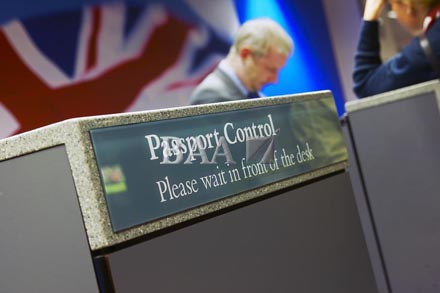 One of my best friends got married in Finland on Saturday, and of course I had to get there. Unfortunately, I had to get back to Cambridge immediately after the party. Because I didn't want to blow my non-existent summer holiday budget for a two-day quickie, I took the cheapest options, which meant bus to Stansted, Ryanair to Tampere, train near the wedding venue, and finally my friends picked me up and gave me a lift to the venue - and the same happened in reverse order the next day. The beautiful, wonderful wedding aside, here are a couple of things I noticed.
- words like "please", "excuse me", "sorry" and "thank you" don't exist in the Finnish language. It is also possible that the government has introduced a new tax for the usage of these luxury items. Luckily, Finns have quickly adopted strategies to avoid these taxes and become fluent in going on with their lives without having to resort to these frills.
- speaking of frills, the term "no-frills airline" has a deeper meaning than I had realised. Terminals are considered as a "frill", so are chairs in the corrugated steel huts they call "terminals". At least in Pirkkala where Ryanair flies to in Finland.
- to provide their British-bound customers a proper dose of queuing practice before coming to the "land that invented the queue", the bus from Tampere city center arrives at the airport 2 hours 40 minutes before the flight to Stansted. To ensure distractionless learning, the Terminal 1 next door with all the cafes and shops is also closed during this time.
- Ryanair apologises for no longer allowing firearms to be carried on board their planes, following a company policy that came to effect on 1st April 2003. I'm surprised, and would like to learn more about their pre-2003 policies, considering especially that after 2001, even attempts to bring sewing kits to planes have been categorised as acts of terrorism and crimes against humanity. I also wonder how many arms traders, after having thought this is just an April fools' prank, had to leave their UZIs to the security control after this new policy was implemented.
- There are three lanes to passport control in English airports: British, other EU/EEA, all other. There are always people who find themselves in the wrong queue(s). I don't understand this. I can see how sometimes people get tired and disoriented, and as all the airports look the same, they might be confused about where they are. But surely they should still be able to remember where they are from? Or be able to check it from the cover of the passport they're holding. My advice: next time you fail to stay at home AND fail to remember where that home is AND forget how to read, ask the staff for directions and take the "all other passports" queue. It also covers "outer space". P.S. United States is NOT a member of the EU. P.S.2 EEA is short for 'European Economic Area' and not 'USA' in French.
- I warmly recommend Finland as a travel destination, especially at this time of the year. It's warm, safe, and beautiful; the nightless nights, the nature. And also, the majority of Finnish idiots took the Ryanair flight FR2195 from Tampere to Stansted yesterday and are thus now out of the country.
- kind advise to some of the aforementioned idiots: it's not considered as a sign of bravery to shout stupidities about "slowness in emptying the tube" in Finnish to the non-Finnish flight personnel, who are trying to ensure that the families with small children exit the plane first. Also, it doesn't count towards your alpha-male score and is not considered as "a situation where you took charge and showed initiative and leadership skills".
- I've become ever so slightly British. I judge the status and respectability of estates based on how their lawns are cut. The wedding venue (a conference/golf hotel/castle) would get a perfect top score otherwise, but seeing a robo-mower parked at the edge of the rugged front courtyard lawn that was full of weeds and in general in a bad shape drops the score. It's not just that the lawn was overgrown; I could forgive it having some of those weeds (as they are extremely difficult to get rid of), and overlook the fact that the edges weren't trimmed and there was a more or less smooth transition from grass to gravel. I can see how the weight of snow during the winters and and the paths of melting waters in the spring contribute to the unevenness of the surface, and to the undefined overall oval-esque shape of the lawn. But the robo-mower is simply wrong. Just like with cutting hair, it's not only about getting it short, how it's cut also matters.
- continuing this stiff upper lipped cawing (I need to stop now, or I'll start feeling like reading the Daily Telegraph): the so called "sculpture park" around the otherwise brilliant Sara Hilden museum in Tampere is a joke, not only because of the lack of interesting sculptures, but also lack of tending of the "garden". If "how to cut it" is too difficult, at least get it short. Please.
- The world is small. I thought I could escape from my work for two days to ensure my friend gets properly married, and to meet friends. When I decided to get a drink from the venue's bar, the person in front of me in the queue turns around, turns out to be my aunt, and asks me why I'm there when I should be in Cambridge doing my PhD. :-) Forget Big Brother: he's an amateur, dilettante and a complete dabbler compared to mums, aunts, and the ladies next door. Anyway, very nice meeting them after a while and congratulations to my uncle on his "longest drive of the day" trophy!
- Finnish summer fashion still includes sandals with socks, belt bags and t-shirts tucked into the shorts.
- To ensure that people who return to Britain would get a smooth transition to the cold climate, the Stansted airport buses have their AC's set at 30 degrees. Conversely, to make the driver feel at home, the ones in Finland have their AC turned to 13 degrees.
- Consider it very carefully before becoming a North Ossetian folk dancer; you will have to wear a fur hat even when parading through the main street in Tampere under the scorching sun and heat, while performing acrobatics and singing Ossetian folk tunes.
- Finland in the summer is too beautiful to describe, and too nice to leave behind. Lack of politeness and sense of fashion, and badly mowed lawns are a small price to pay for a paradise on earth (perfect with mosquitoes).
Saturday, June 10, 2006
Invigilation
From my perspective as an invigilator of exams, the main task during a three hour paper is to stay awake. From the students' perspective, my main task is to give them more paper when they run out. From the university's perspective, my main function is to make sure nobody resorts to "unfair means", i.e. cheats.
The exams show is run by the examination office and the various departments, and overseen by the university internal police, the proctors. I was surprised to find out that the word 'proctor' has no etymological link with the Greek word proktos, the origin of words like proctology etc. Nevertheless, I suppose anally following and implementing largely irrelevant or archaic rules is seen as part of the vital tradition of the ancient university, as the sine qua non of its academic excellence. Never could I guess that allowing only water to the exam halls would be the "Ravens of Tower" of Cambridge...
The candidates are allowed to bring a small bottle of water with them for the three hour exam. In the invigilator training this vital issue is discussed in more depth and detail than any other issue, including fire alarms and people falling ill during exams. The only thing that gets an equal amount of airtime in the two hour training is how to prevent cheating. Cheating, to my experience, is the only thing that is even less problematic in the exams than the supposed chaos and havoc caused by orange juice and Lucozade.
During the exams, the proctors go around Cambridge, from hall to hall in their gowns and mortarboards, checking that all rules are followed. Since the drink issue is of the highest importance in running the university exams, it's no surprise that the purpose of these visits seems to be to spot potentially hazardous apple juice bottles among the Evians and Highland Springs. Last week, one of the proctors found two suspicious containers in the classroom I was invigilating. One guy had a can of Red Bull in addition to a bottle of water on the floor next to him. The Proctor was clearly deeply shocked to discover this, as he twitched (on the British Scale of Expressing Emotions this equals to 6.8 on a Richter Scale), and then told me "the gentleman up there has a can of beer." This shows how up-to-speed these people are with the so-called real life, and so I advised him that it's just an energy drink. To which he stated that it is still an "illicit drink" and that I should confiscate it immediately. So I did. He then, having discovered how I had completely neglected my duties and not properly screened the room for these hazardous chemicals, continued hawk-eyeing the room, and spotted something suspicious. He pointed to me that the "gentleman in the yellow shirt" had a "non-transparent bottle". I looked up and saw this dude at the back, in a faded yellow t-shirt, and he had a bike bottle on his desk. I confessed that I hadn't checked the contents of that bottle, to which he said "you probably should". I didn't.
I think bothering people with nonsense during their exams is not the best thing you can do, when you are there to bring them more paper so they can keep writing incessantly for the three hours the exam takes. It would be rather silly, wouldn't it? But, undoubtedly the illicit drinks debackle will only gain in momentum, as next year in the training session for the invigilators they will undoubtedly emphasise how important it is to keep this issue under control, as some students have been known to try to smuggle beer into the exam halls.
Tuesday, June 06, 2006
Not working
 Just can't start working yet. Can't waste my time in here doing boring work. Finding a proper work/space/time -combination is becoming more and more problematic. Now, it's all too nice, I like the view too much to bury my eyes to an article, or even worse, to some datasets. I feel I should have the next 4 hours off since they are going the be the last ones Edinburgh has for me for now.
This was an easy decision, and I'm kidding myself to believe it's due to the exceptional circumstances. (Not even so) deep down I realise how skipping work has become easier and easier lately, and I barely need an excuse. My attention will jump to an interesting newspaper article about genetic makeup of lemurs or the 78th anniversary of the beheading of a Kirgisian union activist like a paperclip to a magnetron. And these diversions have a gekko-like hold of my mind, while the the mountain of work seems to be made of hot-oiled nanoparticle-coated glass that is impossible to take a hold of.
Volumewise, my work has been rather down lately. Somehow the celestial constellations of work-enabled timepoints and good-vibed places have not been in conjunction. Surely, I'm droning on, doing stuff, but having lost virtually all perspective and much of the motivation it has been a struggle. I haven't been inspired, but I must say, I haven't really perspired much either. I've given up too easily; if the work hasn't been progressing or didn't "feel right" I have avoided it, tried another time, another place, but rarely successfully. And I've been annoying myself in the process, obviously. The stuff I'm doing now is important only for me and nobody else will be screwed if I do it late or leave undone. In the short run, that is. On the longer timescale, the timescale of graduations and getting proper jobs, there is of course an impact to others around me, but somehow I've not paid any attention to those issues. That's what cloudy horizons and lack of perspective do to you.
So, what to do now? As I said, Edinburgh has restored some of the motivation (as visiting nice places and getting positive feedback in conferences does) and so I guess I just have to start making better plans and force myself to stick to them. And pay less attention to those genetically modified Kirgisian gekko-lemurs and their atrocities against labour union activists.
(written 05/06/06 in Elephant House, Edinburgh)
Sunday, June 04, 2006
Edinburgh
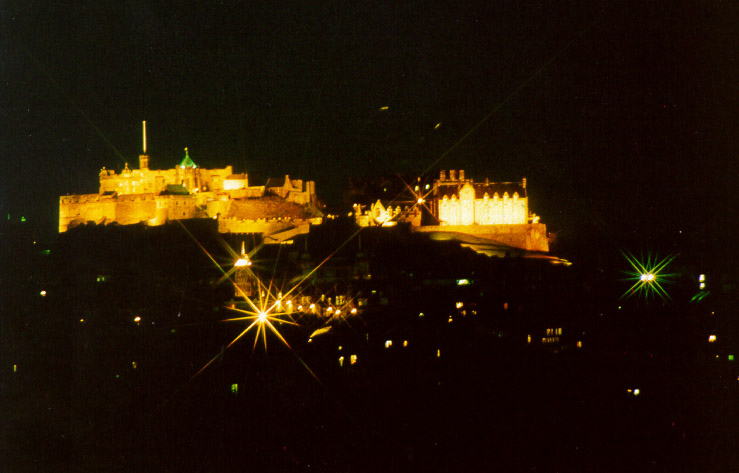 I like this city. After stuffy Cambridge it feels like a breath of fresh air. Not just academically, but also in terms of the surroundings, the hills, sea, the wind... I'm always "surprised" to see that not all of Britain is boring and flat like East Anglia. But then again, we're in a different country now.
I've been here for a couple of days now, in a conference, how else. I now have about a day of "free time" before I'm heading back down, "south of the border" as they say. And I feel revitalised and refreshed - partly because the conference was a resounding success, but also because my brain had somehow got stuck on this very short track of thoughts and the trip up here seems to have broken the loop, and my mind flows more easily now.
There's a whole different vibe here, a dynamism, easygoing but sturdy feel, that somehow is similar to Ljubljana, or actually, Helsinki. Cambridge is about keeping things as they've always been, and while it's very beautiful and nice, it somehow feels stagnated and boring. And I'm not even talking about the university yet... :-)
Our host was right - the spirit of the Scottish enlightenment and David Hume is still around.
(P.S. Most Scottish football fans have started to support Trinidad & Tobago, since they play against England in the World Cup. Similarly the German football fans are now donning Scotland jerseys - it would be too rude for the polite hosts to be openly against England, so supporting Scotland (who unfortunately didn't make it to the final tournament) is the next best thing. The jerseys they are buying en masse are replicas of the 1978 Scotland shirts, voted most stylish ever by a magazine. But, I like the political statement there more than the fashion statement.)
Saturday, May 27, 2006
Super Mario sucks
Literally.
No, I think this is a very cool hack. Who would come up with this thing? What was the original idea, or the original "need" that made him do it? Boredom and too much free time? Anyway, great stuff, I'm eagerly awaiting the Roomba-orchestra!
Tuesday, May 23, 2006
Sunday, May 21, 2006
Monsters Inc.

They did it! As BBC put it, "Lordi came. They rocked. They conquered."
The first ever victory for Finland in the Eurovision Song Contest, and it was a sweeeet one. It's so easy to be cynical about the ESC; how the music is so bad, the performances so cheesy, how it repeats itself year after year and is just a waste of time and money. In one word, it's Eurotrash.
What these cynics forget, is that ESC is entertainment and a bit of tongue-in-a-cheek fun. It has immense camp-value for exactly the above-mentioned reason: the songs and performances are cheesy. We like to hear the mock-ABBA -tunes, the johnnylogan-esque power ballads, the freak shows and hare-brained entries from "weird" countries. We like the fact that the show follows a clear formula, and that we can mock the frocks and laugh at the jerky dance moves and banal choruses.
This doesn't mean it's all a joke. No, you have to take it seriously enough, but not be serious about it. It's about entertainment and putting on a show people can enjoy. Lordi did just that. For too long the Finnish ESC-establishment has had a false idea that it's about the tune. But, ESC is not a competition for composers, it's a competition for performers. And the Finnish acts before this year have been bland, boring, and insignificant. Some of them might be good artists, some of the songs have deserved better than the 3 points they got, but now for the first time we sent a full, proper show.
To win the ESC you need to grab the attention of the masses, make yourself known.
Finns are usually not very good at that, but this time the show was so strong that they didn't need to push themselves - the media was after them. Rather than trying to do it with sex, they did it with fire and a hell of a stage show.
Undoubtedly there will be copycats. But as much as people like the repeating formula of ESC, they like uniqueness, and the more outrageous your idea, the more likely it is to work only once.
Just like any entertainment, ESC can be seen as more than it is, a symbol for - well, many things. For example, for the Estonians and the Ukrainians, winning the ESC was about belonging in Europe, being accepted as a nation after decades behind the iron curtain. While that's a bit grand, it seems that the ESC has often been seen as a force that brings Europe together, promoting understanding and plurality. The freaks and weirdos have been knocking on the doors of Europe and the Europe has welcomed them in. Odd countries, strange LBGT-types and Nordic monsters, all in harmony with the pretty boys and girls in white suits and their good old three chords.
(cynical post scriptum: I wonder how valuable the ESC victory will turn out to be for Lordi commercially...)
Edit: The Eurovision website has a nice interview of Mr Lordi that ends in a typical way: a quote from Mr Lordi: "‘Kitos’ means ‘bye-bye’ in Finnish.” ESC replies: "Kitos, Mr. Lordi."
(Pic: Eurovision.tv)
Thursday, May 18, 2006
High horses
This must be a world record in hypocrisy and double standards. Fox News "debating" with the Westboro babtist church (yes, the ones who hate Sweden for being gay-friendly etc.) representative about whose side God is on in the Iraq war and what he wants etc. It's either hilarious or appalling, depending on your point of view. No, I couldn't watch all of it either - 15 seconds is my personal record of continuous Fox News watching in general. Scary thing, I almost started to agree with the Westboro nutcase.
Wednesday, May 17, 2006
Just a bicycle
 They say Cambridge is a city of cyclists. At least it seems to be full of them and they are the only sane mode of transport that can get you to places in the town centre. It might not be the city FOR cyclists, however. The facilities for cyclists - well, I've seen worse but I've seen better. There are good bicycle lanes here and there, there is access to the historic city centre (that is closed from cars other than buses and taxis) and there are places you can leave the bike while shopping, at lectures etc.
On the other hand, many cycle lanes are shared with the buses, who don't give a damn about cyclists, the city centre is so full of tourists walking here and there on the roads that you can't really cycle through the centre without killing a few of them every time, and there are not nearly enough parking places for cycles in the centre.
So, some good, some bad. I'd still rather cycle in Cambridge than drive a car in Cambridge. But that brings me to the issue that has annoyed me a lot lately. The behaviour of car drivers, and the utter disregard of cyclists. When turning across the lane, pulling over for parking, making a u-turn or doing anything else similar, any driver would first need to make sure the road is clear for them to do the manoeuvre. And for 95% of the drivers, the road is clear if there are no cars. For the rest 5%, the road is clear if there are no cars larger than the one they are driving. No one gives a fiddle about cyclists.
Today I almost crashed to a car that was coming towards me on the opposite lane, but just in front of me changed to my lane, stopped, and started to pocket park to the parking space on my side of the road. She would have left any car to go first before doing this, but since I was just a cycle...
Cyclists are better off crossing roads with pedestrian greens rather than waiting for the car signal to go green, since the cars turning right across your lane will not look, stop or wait for you to cross the road first, they are cars and can comfortably mow a few cyclists down without blinking an eye.
Sitting in the inevitable queue in the car is a skill as well. Most people already know to stay in the middle of the lane or closer to the centre line, so that cyclists can pass from the left, between the sidewalk and the cars. Some people don't. Some people will move to that space without looking, possibly to give more space (a lane and a half) to the oncoming vehicle and to save their precious wingmirrors from scratching. I will personally thrash the other mirror of the next idiot who does that, since I'm getting rather pissed off with these I-can-only-see-it-if-it-weighs-two-tons-and-has-four-wheels -bimbos.
BTW, how come so many crazy people still cycle without helmets?
(Pic: answers.com)
Tuesday, May 16, 2006
Another talk
I gave a talk in my college last week. With my parents and girlfriend in the audience, I was feeling a bit more giddy than normally, also because this was the first "popularisation" lecture I've given. On the other hand, since the theme was more general than my own work (actually, I didn't talk about my own work at all), I found it easier. It was easier to truncate things, leave irrelevant or uninteresting stuff out, just surf on the waves of anecdotes, and in general, just have fun with it rather than worry and frown over the academic validity and complexity of the issues.
Other than being half an hour late, then failing to get the data projector to work, and having to cut the talk a bit short as a result, I think it went OK!
It was a bit hilarious, actually, I was sure it was supposed to start at 6, and at 5.30 a friend of mine calls and asks whether I was planning to attend my talk: they all were there at 5.30... Luckily they had some wine and crisps to keep themselves content. The data projector just refused to power up, I suppose a fuse had blown somewhere, but since he projector was permanently fixed to a high ceiling, there was no way to even reach it properly, not to mention repair it or change the cord or anything. So, I had to just speak, try to explain things without the help of graphs and figures, and try to keep the audience entertained without the help of the funny stuff and visual jokes I had put in the slides.
It was a positive experience, and the dinner afterwards very nice.
Google Notebook
 In their quest to organise ALL the information in the world, Google (and other companies involved in the search-business) are doing great services to scientists and students, who often spend most of their time trying to find and organise information. And often, the crucial info turns up too late: as the article or thesis is being submitted, a random search produces hits of previous research that should be referred to. In the worst case, the stuff you find last minute demonstrate your approach wrong or second-grade, or at least not as innovative and unique you thought it to be. Nobody likes to make major changes last minute (or after), and while everyone is aware that there is no way they can find all the relevant information, researchers like to think they've got the major parts.
Google entered the "academic market" with their Google Scholar, a search engine that searches databases of scientific publications, providing links to abstracts and full-texts (which you of course can access only if your institution has the subscription to the services it links to). Google Scholar saves time, as it searches several sources at the same time. It still has a bit to go in terms of integrating the search results to a form where they can be manipulated and downloaded to citation managers, but it's great in finding what there is.
Google Books has been in the centre of a debate over digital copyrights, as have been other similar initiatives to digitise books and publish them in searchable form in the net. In spite of its limitations, I've found this service useful for the purpose of quickly checking the reference or quote I vaguely recall, and verifying the "correctness" of other people's quotes, especially if I think they are being misquoted or quoted out of context.
Now another product hits the campuses, and why not homes as well. Google Notebook. It's a beta-version, i.e. not a finished product but a test version, which in Google lingo means it is available through "Google Labs". (Actually, Google Scholar and Google Books are also beta versions, although they've been around for longer). You download a little item to your toolbar (for those using Firefox, as you all should, it's just another extension that shows up as a icon in your browser bottom bar) and you are ready to go. While you browse the net, you can highlight stuff and by clicking "add" in your notebook toolbar, add that text, picture and the link of the source to a notebook for later use.
This is brilliant, and I've unknowingly wanted one of these for long. I've done my explorations by arduously copying stuff from browser to TextPad or Word, with the result that some text is huge, some tiny, and all tables look skewed and corrupt. And then I often have to copy the links separately, and of course I can't be bothered with the pictures. Naturally, the Google notebooks that users have made public are searchable by everyone, and your private notebooks are searchable by you. Good stuff, having just downloaded this thing makes me feel I accomplished something worthwhile today! :-)
Wednesday, May 10, 2006
Florida
If baby buggies are large in the UK, everything is larger in the US. Even the pensioners. Rather than being the tiny shrinked-down grey-haired grannies and old-timers with their cuppas and teacakes, the US third-age population, at least in southern Florida, seems to be well-tanned, blue-haired and wide, gulping down huge lattes and carrot cakes the size of Wales.
And they tend to be very demanding and unapologetic, it seems. They want service, know how to demand it, have the green to pay for it and are stopping for no-one in their pursuit to get it. Including other guests or customers. That's what I heard from the local graduate students, who have the pleasure/pain of doing academic work in what is basically a beach resort. Florida Atlantic University's modern campus is in Boca Raton. Relatively unimpressive and unidentifiable architecture, surrounded by huge parking lots and a lot of nothing, it probably provides very nice functional facilities for higher learning and research, but doesn't really impress you like some campuses do.
Cambridge is a tourist attraction as well, but unfortunately we don't have the beaches or the sun. But, we don't get the type of tourists beach resorts usually get, which is a good thing. One-all score, I suppose. All in all, even though the trip was nice, the morning swims in the Atlantic really great, I'm glad to be back home. It all seems a bit more real and genuine. I'm sure it's just in my head.
It's not just the SUV's...
It's not only the SUV's and other gas-guzzlers that are getting bigger. The baby buggies are going through the same thing. Just saw a mother trying to push the baby in a pushchair through a crowded cafe. The pram had all-terrain wheels and the same aggressive look we're used to seeing in the Humvees and other Chelsea tractors. Also, the modern muscle-buggies seem to be loaded with similar useless extras as their motored counterparts: cupholders, storagespaces, disc brakes, suspension systems and cooling/warming units.
I guess having huge cars means that you don't need to worry about how to transport the buggy, so you can boost the size of both. In this case, both the baby and the pusher seemed to be size XL as well, so perhaps I just landed to a strange Swiftian parallel reality.
Tuesday, May 02, 2006
Certainty and scientific method
This brilliant article on certainty takes me to a topic I've long wanted to address in this blog, as it's one of those issues that every scientist deals with every day, and which at the same time seems to be the most difficult to convey to the "general public".
Won't write more now, as there's too much work to do at the moment (I'm off to Florida for a workshop in two days, and it's +35 degrees there!!), but perhaps the necessary evil of transatlantic travel, the endless hours in airports and jumbo jets will produce the next post on these topics.
Meanwhile, think why Woo Suk Hwang wanted to make up research results, and why he didn't get away with it, and why a seemingly "proper" British scientists come up with formulae for perfect toast, most depressing day of the year, or perfect ways to dunk bisquits to their tea? And in return I promise to think why I didn't feel guilty for passing my opinions and impressions as scientifical results to a TV crew last week.
Friday, April 28, 2006
Chuckle
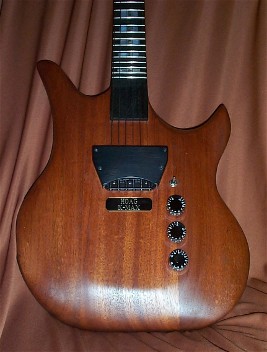 Hoag has developed a guitar with optical picks. I.e. instead of microphones, the sound is picked up off the strings using optical detection of the string movement. MusicThing decided that this is "just wrong", which is understandable for a vintage / retro-oriented blog.
Most guitarists I know are so fussy, geeky and "analogue" about their gear that I expect this to be eaten alive anyway. Want to know a secret? Guitarists spend hours and hours discussing the minutiae of the technical features of their guitars, amps, and the miscellaneous hoovers and moulinexes they plug in between them. It's all about them having this or that component that makes them superior. Or they have the fret board that only uses bio-organically heat-molded spruce from the southern hillside farms in Guatemala, where the optimal micro-climate has enhanced the porousness of the material in such a way that it allows 2% more upper-range vibration-damping when playing fast passages. In each guitar that a proper guitarist owns, there are at least 3 such features, which, so they say, have been the criteria for choosing that particular guitar among the 3 655 430 they have tested in various music shops around the world, by playing 'Stairway to Heaven' and the riff from 'Smoke in the Water' driving all music shop keepers to become the edgy nervous wrecks they are. And the secret? They just buy the guitar that looks the coolest.
The makers of the optical guitar clearly know their target group, the geeky hifi-guitarists who publicly claim to prefer progressive rock, while they secretly hope they could play in Bon Jovi. So, the guitar actually looks as boring and mainstream as Bon Jovi sounds, and to give them the argument their proge-hifist side-personae would approve, according to HarmonyCentral the "pickup is responsive to string movement below and well above human hearing".
Fan-tas-tic. As blogger M brilliantly put it: "That's awesome. I've been working on some compositions that are outside the range of human hearing, and now I can finally not hear how they sound."
Monday, April 17, 2006
Great idea
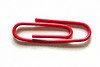 Just read about this in CNet. (I know, I should be in bed by now...) This goes to the category "could work once", just like the Million Dollar Home Page. Kyle wants to trade his one red paper clip for a house. Rrright. The amazing thing is that he's almost there. He first traded his paper clip to a pen, and then via owning among other things a generator, snowmobile and a van, he went on to obtain a record contract, and currently he has a year's lease of a duplex in Phoenix in his hands.
I'm sure there will be hundreds of imitators, some of them just copying the idea, some others modifying it, maybe even coming up with something equally impressively simple and elegant. The same happened with the MDHP, selling pixels become a fad and everyone tried to follow Alex Tew's footsteps. Of course, the advertisers are interested in the novelty, the media coverage and curiosity of the masses, and only the original inventor and the first one to do it will be internationally newsworthy and get those interviews in the FT, NYT, CNN, BBC and other world-class acronyms. The rest will have to do with KACL, PBS, KCNA and the rest of them. And of course, only the original website will be generating the insane volumes of web traffic that makes these kinds of projects commercially viable for those who take part. While MDHP was just about business, the paperclip bartering seems to be more like mountain climbing, in that the people who take part seem to be more interested in making the project happen rather than any immediate financial gain.
Anyway, these two projects have really captured people's imagination, it's the "go west, young man" all over again, this time in the net.
(Pic: The Famous Paperclip from oneredpaperclip.blogspot.com)
Murphy...
Why is it that every time you get both your hands dirty, be it in the kitchen or when fixing a bike, your nose starts to itch? It's probably connected to the process that makes your rolled-up sleeves slooowly drop down when you're doing the washing.
Sunday, April 16, 2006
Wikipedia vs. Encyclopaedia Britannica
 Remember the news@Nature study that compared Wikipedia and Encyclopaedia Britannica, and found that the two were almost equally matched in terms of accuracy?
EB responded, saying the research was "Fatally flawed", to which Nature said it wasn't. While Nature and EB were swapping hate-pdf's, (I do think it would show more class if they'd behave more like gentlemen and publish their argumentation as books. So sad the world is too fast-paced for such gentlemanly behaviour...) the media and all sorts of wise-noses started debating on the issue.
What is the point of old-fashioned print-publishing, is there any credibility in on-line publications? Is this the beginning of the end or the end of the beginning, and which one of the two media is at the thin end of the wedge? Someone pointed out that Wikipedia actually has an entry for Encyclopaedia Britannica, but the EB doesn't yet have an entry for Wikipedia. Funny...
What I found today was even more hilarious (I know it's not actually even funny, but for boring people the smallest speck of comedy will be a laugh). Some entries in Wikipedia are actually copies or adaptations of articles originally published in the EB. If Wikipedia has got it's facts right, the US copyright law states that the copyright term is 95 years for corporate authorship. This makes the 11th edition of EB from 1911 now public domain!
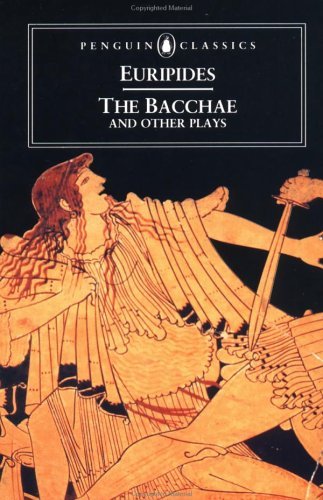
I was looking for more information about strophes and antistrophes, and Greek poetry in general, as I wanted to know more about the structure of Euripides' plays. I have to say, his plays are pretty tough, and those Greek gods are guite a bunch of a**holes, to be frank. :-) Euripides wasn't holding it back. He must have had a pretty dark imagination to come up with all these schemes... And you can see his ideas and turns of plots being utilised in every Tarantino movie and sick Korean flick about revenge and suffering. That's imitation, or even plagiarism and watered-down as that. It's all been said over 2000 years ago, which is sad in a way (any new ideas, anyone?), but since it also means it is public domain, what can you do?
Oh, about writing books as a way of arguing. My favourite example is the debate about studying cognition, figuring out the inner workings of The Human Mind. Steven Pinker, of Harvard University, wrote a book "How the Mind Works", in which he, according to his humble website, provides a "grand synthesis of the most satisfying explanations of our mental life that have been proposed in cognitive science and evolutionary biology, with insights from disciplines ranging from neuroscience to economics and social psychology. [The book] is also fascinating, provocative, and thoroughly entertaining." Pinker's book was published in 1997. Right after that, in 2000, another cognitive scientist Jerry Fodor published a book called "The Mind Doesn't Work That Way", where he criticises cognitive science, including Pinker, for getting some of the epistemological issues fundamentally wrong. Pinker has been publishing stuff since then, but to my disappointment, none of it is titled "Does too!".
(Pic: Penguin Classics cover of Euripides' "The Bacchae and other plays", from amazon.co.uk)
Friday, April 14, 2006
Wow, I want it. What is it?
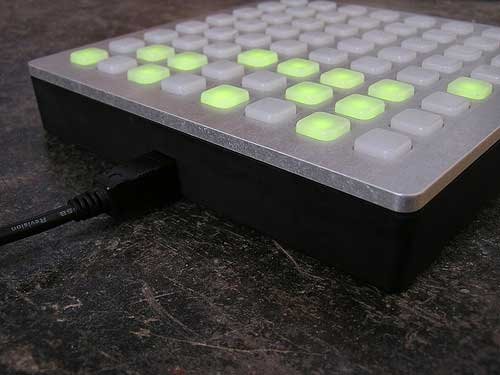 It's a Monome. A box with buttons on it. You can press the buttons and control your MIDI with it. Check out the video, is that cool or is that cool?
It's so simple and elegant, I like it, and I want it, even though I can't think of anything I could use it for at the moment. But that's the beauty of it, it's all open source and modifiable, and everyone will come up with an individual way of using it. And that's great, there are too many over-defined and focus-group oriented and very limited gadgets and tools out there. The ones that genuinely promote creativity and are open-ended deserve good karma.
(Pic and the original story, thank you musicthing.blogspot.com)
Thursday, April 13, 2006
Pass
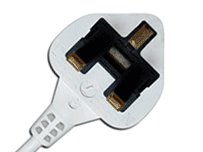 Yesterday I forgot my laptop at work. I was going to take it home because I was planning to watch some DVD's in the evening, but halfway home I realised I didn't remember to pack it. I just had the empty backpack. I didn't feel like turning back, so I decided to read instead.
Well, during the night (I like to think this way, even though it was probably early this morning) someone had gone through our lab and sticked a "Pass - Electrical Safety Test" sticker to all the plugs in the room, including my laptop's. Thank you,"NS". I don't know what this test entails, but it must be a quick one, since I came here at 10.30 and already all approximately 100 or so plugs in the facility had been labelled.
Now I actually would be allowed to use the adapter in the University Library, as well. They insist that if you want to plug in your laptop to their grid you need to have the university electrician to test, approve and label your plug first. I have to say that I have so far adopted a slightly freer interpretation of this rule... as in not having any stupid checks and plugging in anyway. I'm sure one of the reasons my laptop power adapter is so big is that they needed more space for all the safety stamps and standard insignia they have printed in the bottom of it. I know, the CE stamp only says that the product has been intended for sale in the EU, and is not a proof of safety as such, just an indication that the producer is claiming they've followed the rules and standards. But still.
In my welcome pack (the material my college sent me prior to starting my studies) they said that no adapters would be allowed. Meaning adapters you buy at airports to fit your two-pin plug to a three-hole socket. All plugs for electronic devices would need to be changed and those plugs tested by the above mentioned university electrician. Again, I took what I think was a more common-sense approach. It is strange how a nation where the general building standards and house technology in particular are of a good old pleistoscene standard, electricity safety issues are made to such an artform. It could be the general obsession with stamping and labelling things, and the innate ability of English people to focus on the irrelevant nitty-gritty.
For instance, what is all this about plugs? BBC just run a feature where they were making some sort of a point by canvassing people and asking if they could wire a plug. Why? Is this a survival skill I've missed? Do people need to show they can wire a plug before they are allowed to buy a house or cash they paycheques? Are dextrous plug-wirers more attractive to the opposite sex than those who don't give a damn? In my opinion, if you are serious about electrical safety, you don't start messing around with plugs on your own in the first place, especially if they are of the moulded type that can't be changed without braking them, as the one in the picture in the BBC story.
At the same time as plugs are being an important skill that old people are excellend and the younger generations can't be arsed about, the BBC is running a series of stories about people's ideas on how to save energy. As you could guess, they are concentrating on the truly important things like the amount of water you put in your kettle or whether you could run a poster campaign or a competition on who switches off their stuff the most. The debate on the site is very typically British. One commentator said that while an inter-county competition in saving energy could drop the consumption of energy by 25% for the duration of the competition and 10% permanently, it might not be good since "for some people it would smack of "nanny knows best". Right. Why would anyone in their right minds give a dingle about such intelligent and well-founded opinions?
It's amazing how people prefer talking about these small details while the actual culprits of poor energy-economy are so glaringly obvious. Newsflash: this is not a tropical island, and never will be, no matter how much you try to globalwarm. Double-glaze your windows, insulate your houses and stop warming them to 27 degrees at day and then letting them freeze at night. Second suggestion: ban the bulb.
(Pic: news.bbc.co.uk)
Dead day
This day is so dead. I haven't really been able to get anything done, so I'm actully going to pack my stuff, go home, do something else, and then perhaps try again later.
Hasn't really been my day, I had a flat tire in my bike, then my iPod run out of battery when I was walking to work. The weather is awful and my girlfriend's away in Finland. Poor me. :-)
Tuesday, April 11, 2006
Priorities first
 When it comes to work, there are three categories of it. "On topic", " "on topic" " and "off-topic". The last category is also known as "procrastination" or "pseudo-work". Cleaning the floortiles under your cooker with a toothbrush when you actually should be writing your thesis is "off-topic" work. So is ironing the curtains, alphabetising your DVD-collection or re-partitioning your hard-drive and organising your browser bookmarks. Usually it is very difficult to do any on-topic work while there is any off-topic work around.
On-topic work is like an unicorn: easy to define but rarely seen. Writing your thesis when you need to write your thesis is clearly on-topic, and so is looking up the reference to the article with the study you are writing about. But looking up references is where the slippery slope to "on-topic" work begins. Sooner than you think, looking up a reference leads to spotting an interesting article you had put aside for later reading, which brings into mind the other article you needed to find. And in just a few seconds your perfect on-topic work of producing concrete output has turned into yet another literature search and hours spent going through the clutter of hits, with the result of finding 3 articles you already have and 79 others you will never need.
So, doing "on-topic" work means you are actually working around the subject but not actually making any progress. I just noticed that I'm procrastinating in "on-topic" work for the third day running. For some weird reason, I all of a sudden decided that I need to understand how the statistical procedures I'm planning to use actually work. And therefore I'm now implementing them to the computing environment I usually use. While this would qualify as on-topic work any other time, now when I'm actually in a hurry just to churn out the results, it is actually not just "on-topic" but borderline off-topic. Especially since most of the stuff I've programmed is not working and I already have all these tools (that actually work), albeit in another environment.
Did you spot the point where on-topic became "on-topic"? Let me highlight: "therefore I'm now implementing...". So, while the intention was pure ("to understand how [they] work"), the vague definition of "understanding" let the "procrastinator within" to take over and start spending time in writing and testing code. Sneaky...
And, the "p w" has managed to convince me not to mend my ways, even though I now see what is going on. I have actually consciously decided to keep on writing these implementations, because it actually is an efficient, if a bit slow way of learning the procedures. But since I need to cut to the chase and get those results as well, I think I need to work overtime. Or just cut down the time I spend in full-blown procrastination or "off-topic" work. :-)
(Pic: www.hse.gov.uk)
Monday, April 10, 2006
Oops not an oops?
 Remember the Chinese vases in Fitzwilliam Museum that broke to pieces when a museum-goer tripped on his shoelaces? The museum announced its plans for glueing the vases together, and conservator Penny Bendall was set on the task. And now, as The Dude would put it, "new shit has come to light".
First, the guy who broke the vases, Nick Flynn, was not allowed to attend the museum press-conference. Then, a week later, he was arrested and then bailed by the police, who now suspect he might have broken the vases on purpose! The police have released no details about why they think his tumble was not an accident, but they refer to an earlier arres on King's Parade.
So Mr. Flynn is a bit of a hoodlum, but why would he smash three priceless vases? Publicity, probably. I don't think anyone would harbor a grudge against some 1700th century Qing vases. Or was Mr Flynn traumatised by the decor of his childhood home to the extent that he now goes "tripping" in places that have fancy China? The story continues, and I'm sure the local press will have a ball with it, even though it seems that the national media has been quiet about it, perhaps unwilling to give the crook the publicity he yearns. This or that, the story continues...
(Pic: Conservator Penny Bendall doing a preliminary assembly of the vases. Photo (c) Fitzwilliam Museum)