 When it comes to work, there are three categories of it. "On topic", " "on topic" " and "off-topic". The last category is also known as "procrastination" or "pseudo-work". Cleaning the floortiles under your cooker with a toothbrush when you actually should be writing your thesis is "off-topic" work. So is ironing the curtains, alphabetising your DVD-collection or re-partitioning your hard-drive and organising your browser bookmarks. Usually it is very difficult to do any on-topic work while there is any off-topic work around.
On-topic work is like an unicorn: easy to define but rarely seen. Writing your thesis when you need to write your thesis is clearly on-topic, and so is looking up the reference to the article with the study you are writing about. But looking up references is where the slippery slope to "on-topic" work begins. Sooner than you think, looking up a reference leads to spotting an interesting article you had put aside for later reading, which brings into mind the other article you needed to find. And in just a few seconds your perfect on-topic work of producing concrete output has turned into yet another literature search and hours spent going through the clutter of hits, with the result of finding 3 articles you already have and 79 others you will never need.
So, doing "on-topic" work means you are actually working around the subject but not actually making any progress. I just noticed that I'm procrastinating in "on-topic" work for the third day running. For some weird reason, I all of a sudden decided that I need to understand how the statistical procedures I'm planning to use actually work. And therefore I'm now implementing them to the computing environment I usually use. While this would qualify as on-topic work any other time, now when I'm actually in a hurry just to churn out the results, it is actually not just "on-topic" but borderline off-topic. Especially since most of the stuff I've programmed is not working and I already have all these tools (that actually work), albeit in another environment.
Did you spot the point where on-topic became "on-topic"? Let me highlight: "therefore I'm now implementing...". So, while the intention was pure ("to understand how [they] work"), the vague definition of "understanding" let the "procrastinator within" to take over and start spending time in writing and testing code. Sneaky...
And, the "p w" has managed to convince me not to mend my ways, even though I now see what is going on. I have actually consciously decided to keep on writing these implementations, because it actually is an efficient, if a bit slow way of learning the procedures. But since I need to cut to the chase and get those results as well, I think I need to work overtime. Or just cut down the time I spend in full-blown procrastination or "off-topic" work. :-)
(Pic: www.hse.gov.uk)
Tuesday, April 11, 2006
Priorities first


Monday, April 10, 2006
Oops not an oops?
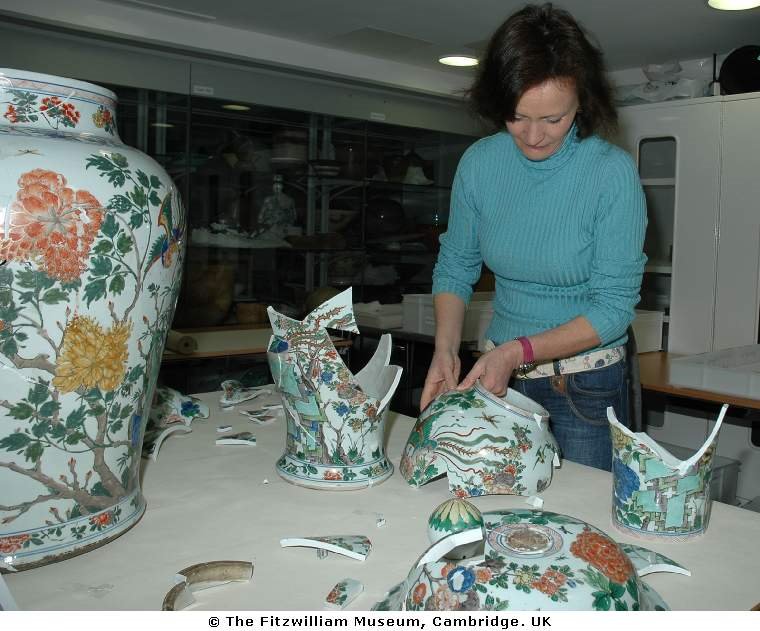 Remember the Chinese vases in Fitzwilliam Museum that broke to pieces when a museum-goer tripped on his shoelaces? The museum announced its plans for glueing the vases together, and conservator Penny Bendall was set on the task. And now, as The Dude would put it, "new shit has come to light".
First, the guy who broke the vases, Nick Flynn, was not allowed to attend the museum press-conference. Then, a week later, he was arrested and then bailed by the police, who now suspect he might have broken the vases on purpose! The police have released no details about why they think his tumble was not an accident, but they refer to an earlier arres on King's Parade.
So Mr. Flynn is a bit of a hoodlum, but why would he smash three priceless vases? Publicity, probably. I don't think anyone would harbor a grudge against some 1700th century Qing vases. Or was Mr Flynn traumatised by the decor of his childhood home to the extent that he now goes "tripping" in places that have fancy China? The story continues, and I'm sure the local press will have a ball with it, even though it seems that the national media has been quiet about it, perhaps unwilling to give the crook the publicity he yearns. This or that, the story continues...
(Pic: Conservator Penny Bendall doing a preliminary assembly of the vases. Photo (c) Fitzwilliam Museum)
Friday, March 31, 2006
My day as a commuter
 It is so true that you don't really appreciate what you have, until you lose it. As a Finn, I took clean water and air, having a lot of space around me, nature, forests and lakes at my doorsteps for granted. In England I have realised that things are different: the few square feet of land that you need for parking your car is more valuable than the car itself. Especially if the lot happens to be within a mile of your house.
Location, location, location. The three most important features of your apartment or house. Or property, as the proper word is. I always thought there was property of all kinds, like intellectual property, or that your pair of skis and collection of Peruvian mouth-organs would qualify as property. Well, they might, but what counts is your proverbial castle. There are two kinds of programmes on TV nowadays; celebrity/not-yet-but-soon-to-be celebrity reality shows, and property/renovation/home & garden shows. Oh, and occasional re-runs of Miss Marple and football.
The reason why people in these English, i.e. hideously small, mildewy, wall-to-wall carpeted and inconvenient houses are so obsessed with the properties of their properties, is that they are so expensive, and that they often are situated a few counties away from where people go to work. Which is London.
Cambridge is close enough to London to be inside its commuting circle. That would at first sound ridiculous for two reasons. First, to me, having to sit (or actually, stand) for an hour in a train to get to spend another hour in the tube to get to work, and then reversing the process in the end of the day is too much. Also, the property prices in Cambridge are hideously high as well, so you wouldn't even save much. Not enough to offset the human costs of the commuting, anyway.
I tried this "lifestyle" for one day this week. When I go to London, I usually avoid peak hours in the trains, not only because you get the tickets half price, but also because you get a seat. This time, however, I was going to London in business, had to spend the whole day, and so needed to take the 7.15 commuter express from Cambridge and the 18.15 zombie-transport back.
You think you know how to travel in trains and tubes, but one trip in the early train with these people is enough to show you what a total amateur you are. These people are professional commuters. The crowd on the platform waiting for train, is not uniformally distributed across the length of the platform. It's in about 8 clusters and one row behind them. There will be 8 cars in the train. The train doors will stop at the centres of the clusters. The people who form the row are those who came too late to make it to a good spot in the cluster, and are waiting for their chance to dash to the doors in case the driver makes a mistake and goes a bit too far and parks the doors between clusters.
There are no happy faces. No one is really looking forward to the trip, there's no sense of excitement, no glow in the cheeks that would reveal inner musings of the prospects of the travels ahead. Any glow is more likely to be a result of a hang-over or overdose of caffeine that they have injected themselves with to battle chronic sleep-deprivation. These people are not going to see their loved ones, or new exciting places. They are going to work, and had to wake up too early. In fact, they ARE at work already. Meeting agendas and business correspondence are being drafted in the minds already, telephone calls are made (clearly to other commuters or business partners in other time zones, since it's about 7AM...). Then the train arrives, and the platformfull of suited grey mass will be sucked into the train that's already half-full of people who live even further away. They might have to get up earlier, but they will be guaranteed a seat in the train. At Cambridge (and there are four other stops between Cambridge and London King's Cross) the train will reach its full capacity and some people will have to sit on the floor or stand.
80% of those who get a seat will take a memo or a laptop or both from their briefcases and start working. To get a competitive edge or just to fight off boredom? Not everyone is wearing a suit. There's also a handful of people who don't trust public transport in London and are equipped with folding bicycles and gore-tex jackets and lycra pants with lots of reflectors everywhere, and are going to hop on their bikes on the station and cycle wherever it is they are going. Assumedly their suits will be there waiting for them.
There's a sense of belonging that you get in here. It's not really solidarity, since you can feel that these people are already mentally preparing for the competitive environment they will face in City, but everyone feels like they are in the same boat. The professionalism of commuting is enshrined in the unspoken rules and codes of conduct. If you see a free seat, you grab it. It's yours even though an older lady would walk past. Since everyone is fit enough to work, they are also fit enough to stand. It's their own fault if they are too slow to board a train. Better luck next time. No loud conversations, even in mobiles. People are working, this is an extension of the office, just without the water coolers and stationery cupboards. You shouldn't pay too much attention to other people's papers or work. You wouldn't want someone to peer over your shoulder to read your memo's, would you? No initiating unnecessary discussion. It is alright to talk with people who are travelling with you, but not initiate stupid chats with strangers about weather or the nice laptop they have. They have the laptop because they are working, even if they would be playing solitaire. There's mental work or mind-cleaning going on and it should not be disturbed.
Efficiency is the word. At King's Cross, people who queue for their coffee fixes all know what they are going to have when their turn to make the order comes. None of that touristy procrastination and thinking aloud, pondering whether to get a large or medium, should we get cream or not in the mocha. It's mostly double espressos and large americanas, all to go, all quick, all routine. You grab the free Metro paper, since it's routine. You read the stories without taking any of it in, since it's the established routine. Everyone is wearing their commuting class uniform, a grey suit or similar. Being there means having a job, a job that is well-paid enough for you to be coming to do it from anouther county. You are important enough for the company for them to pay you enough to make it worth your while to do this every day. Success!
But, it takes its toll. Even though the public transport in London is phenomenal and works astoundingly well, considering the number of people that use it every day, it is still a drag. At 6 pm, about 12-13 hours after getting up in the morning, the same lot will crowd another train and head back to Cambridgeshire for the night. This time many of them are going to their loved ones, but the weight of the day is still too much for them to crack a smile. Someone is still working, although it's predominantly evening rags and not working memos anymore. Competition for seats is different, since this time the train waits for commuters at the platform, but the same rules apply. "I've worked so hard today that I deserve this seat. If the granny needs a seat, one of the young students can give up theirs. I pay for their education anyway in my taxes."
What would you do with 3 extra hours in your day? How valuable would they be for you? How much would you be willing to pay to get the hum of train-travel out of your head? I don't know. I know I wouldn't want to commute like that, and I'm now much more appreciative of the fact that it takes me 5 minutes to cycle to work, in case I decide not to work at home. But, it might be that some day I will join the grey mass, know where the train doors will be, or even get myself some reflecting gore tex and lycra and a folding bike.
(Pic © www.FreeFoto.com)
Monday, March 27, 2006
Mind-cleaning
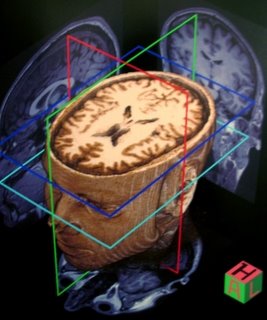 In other words, procrastination. Or actually not really. Mind-cleaning seems to be necessary, anyway. Which could be just another excuse to feel better about procrastinating, but before you judge me, let me explain. What I mean with mind-cleaning is the kind of activity you need to engage in when your thoughts get so tangled that you no longer know what the initial question was. Logically, that's when it becomes impossible to find answers.
I've been in that situation a lot lately. The challenge of the last couple of weeks has been trying to sort the technical minutiae of the analysis procedures I've been building. So, more than often I have found myself staring into the red brick wall of a dead end. I would be tinkering with pieces of code or some calculations or whatnot, and all of a sudden I would realise that I've been trying to fix something that isn't broken, or trying to use fixes that won't ever work because of some other fixes I had made earlier etc. Being a grown-up, sensible person, instead of losing my temper or all of my hope, (or indeed instead of starting over without any new ideas), I would take a step back and clean my mind. Sometimes so effectively that it would take literally hours to get back to work, but there are risks in every strategy, right? :-)
There are many methods. Reading the latest news is one, writing a blog entry another. But the better you can engage your mind in something totally different from your work the better. This is the key to the success of Sudoku. All you think of are 9 numbers... In addition to Sudoku, I find the online quizzes quite effective. The "classic" challenge is of course the news quiz, or the Uutisguru (News-guru). I'm back on the top-20's of the monthly rankings thanks to this latest data-project. :-) The engaging part of this quiz-format (Who wants to be a millionaire -style, a question and 4 options for answers, the faster you answer, the more points you score) is that even though the pool of questions is relatively limited and tends to repeat itself after a few dozen games, the game still maintains its addictive nature, since to get top scores you also need to be fast.
In fact, you have just about a second to give the right responses if you want to get to the very top. Which means that you need to learn very quick associations between questions and their answers. For many of the questions, I don't need to read the question at all, since I know which must be the right option just by seeing the answers. So I glance instead of spending time reading. With one glance I get an idea of the question, hopefully recognise it and then sweep down to find the right answer, following it with mouse. Sometimes the right answer is easy to find, since it is the shortest / longest of the options. So you save the time you would spend reading the options, just go for the one that is correct, based on the shape.
The makers of the quiz are aware of these tactics, since they tend to device nasty traps, like using answers of similar length or appearance, or in questions about years tend to use the right answers for one question as the wrong ones for the others. There are also some questions that have so much text or where the dates for instance are written out so that you actually need to read them thus losing time. As in "Who wants to be a millionaire", there are 3 lifelines, but if you need to use them, you are pretty much screwed for getting a good score. If you have done well otherwise, there might be time for a quick "50-50" but that's about it. Having to think for an answer is bad, since it takes too much time.
And that's why these quizzes work as mind-cleaning. Nothing beats good old asoociationism as a way of getting rid of congestion higher up in the cortex!
(Pic: my brain (there is one, hoorah!), fMRI photo taken last Thursday in MRC-CBU in Cambridge)
Friday, March 17, 2006
Read and re-read
 I'm not reading much these days. I should, and I will, once I get some of this data analysis backlog cleared. I have about a dozen books and a wad of articles lined up for reading. In addition to this new stuff, I am now beginning to realise that I would need to read some of the "old" stuff again...
For the first half a year of my PhD I did nothing else but sat in a library reading (studywise, that is). Books, articles, conference proceedings and review papers (oh, how I love GOOD review papers, you get the essence of dozens of articles and only need to read one - as long as it is a good one, which means it doesn't miss important articles and doesn't misrepresent their findings).
I used to take notes of what I read, since I thought I'd go back to those notes when writing up and would then easily find where this or that piece of information is, who said what and where. Now when I'm doing just that and visiting these old notes, I find that there are only two minor problems: I can't find the right stuff and what I find is useless.
The first problem arises from the fact that my system was "designed" to find the relevant information from the given book, as long as you knew in which book it was. And this is the critical fault. I'd first need to find the word-file with the notes of the correct book, to be able to access my fancy notes about quote x being on page 223. Luckily EndNote (with it's facility to store abstracts as well as references) and Google Desktop search help somewhat in overcoming this problem.
But, the second problem is of a more fundamental nature, and is the reason why I need to start re-reading the books. If I'm lucky to find the right notes, I find them mostly irrelevant. What I thought to be important and interesting 3 years ago, now seems more or less trivial, while the important bits are not at all covered by my notes. My research focus has shifted just enough to
shift the light spots into shade and vice versa. Of course I can also blame the inevitable ignorance of a first year PhD-student for not being able to see the forest from the trees.
Well, I suppose it is rather normal not to remember everything you read 3 years ago, and with a bit of searching and browsing quite a lot can be recovered from the notes I wrote - it definitely was worth the while writing them at the time. But this necessity to re-read seems to work on a shorter time-spans as well. Sometimes I read an article or a text, fail to be impressed, then go back to it from a different perspective, and get completely blown away. The current mind-set has a huge effect. Unlike prose or poetry, scientific texts are always read "with an agenda", there's something you need to know, something you want to find out. That might be the methodology used, the results obtained, or the theoretical framework and references, for example. Therefore you always tend to read these things with different hats and glasses of different shades on. And then either fail or succeed to find significance in the texts.
This mindset- or agenda-effect can be seen clearly in scientific conferences. In any given thematic session, most researchers will have read the same books and articles, and are all quoting the most seminal ones. But they all are "using" them differently. Sometimes the interpretations differ from each other so much, that you start to wonder if there are two completely different editions out there (unlikely if it is an article, more possible with books). This illustrates that it's just a case of "read what you want to read". These events always make me re-read some of the old stuff, just to check which of the presenters got it right and who was wearing the least transparent, self-reflecting glasses when reading it.
Wednesday, March 15, 2006
Difficult conclusions
When is it ready, when is it good enough? I suppose every PhD student battles with this question. After numerous drafts, revamped structures and re-written sections, a final version has to emerge. At some point, you just need to let go, resist the urge to go through it one more time, change the word order, polish the grammar.
I'm nowhere near this stage yet, but I'm already aware that when I am, letting go might be a major issue for me. Currently, I'm having difficulties in making some of those decisions that will be "final"; in the way that once they are made, I can't go back and change them. I wrote about this earlier, when describing my experiment preparations. I've lately discovered that this is a more common issue in my work than I've realised. I often find myself procrastinating before taking a step that will finalise a relatively meaningless little step of the work. Perhaps it is the feeling that everything has its consequences, and I'm now on the "final lap" and there will be no "next time", no second chance to go back and do things differently. Last experiments, last analyses, last literature reviews and last revamps of the theoretical framework... And each small decision weights a lot more than it used to a year ago, when everything was still "in process", "just a draft", "a penultimate version", "a suggestion" or merely "a digress which may never lead anywhere". And also, there are no excuses, since I should have learned my lessons already and be the expert of the field...
The new CEO of Nokia, Olli-Pekka Kallasvuo said recently in an interview that he has always been quick in making decisions. As a PhD himself, he probably developed some of these skills when getting through this process. I find some comfort in the thought that if someone is able to make big decisions concerning 57 000 employees and millions of customers, I should have no problem with getting on with the nitty-gritty issues of one small PhD thesis.
Tuesday, March 14, 2006
Chaos
Auugh, too many people around... The "lab" where I'm working is currently undergoing a mild to moderate mayhem, as all undergraduates with their graduate supervisors are trying to run their "experiments" before the term finishes. This means that I can no longer assume that the tablespace and network cable that I usually use as my "homebase" would be free. On the contrary, it is most likely taken over by an undergraduate eating some of the chocolate that was reserved as a reward for the participants for her experiments. There are papers and laptops everywhere, people coming and going, students giving instructions on how to respond to their behavioural experiments, how to fill in the questionnaires and so forth. Some others are debriefing their participants on why they made them listen to the same boring stimuli 35 600 times and trying to pretend that it doesn't matter if they responded '4' on a seven-point scale on every occasion, while inconspicuously trying to write "outlier - delete" on their notes.
I needed to evacuate to my "branch office" for most of the day, just to get something done. It's just too much to have all this commotion around while trying to think about how to process your data. I don't like open offices and it is especially difficult if someone is on "my" reserved space. But, the term ends this week and the mind-numbing peace will prevail again. I wonder how long it will take before I get bored with having no one around and start blaming quietness for not being able to work at optimal efficiency... :-)
Thursday, March 09, 2006
Googlism
One of the many google-based fun-applications out there (I'm sure everyone is familiar with the googlefight...) is Googlism. It takes a name or a noun, googles it and presents results in "X is __" -format. Pretty funny.
According to Googlism, TH is:
- our finnish hero
- iceland's most popular dj (this would be so cool...)
- a licensed minister with new life church in colorado springs
- speaking norwegian into big white plastic bag after wild night of drinking vodka and beer and whatever was available (as I do...)
- de sympathieke naam van een heel vernuftig toestelletje
- quite enourmous
- small and he's definitely beatable
- a medium size compact black and gold male
- still heavier than her normal size but she looks fine
- all woman
- married with nanna and has 2 children (oops...)
- a cat with great balance problems
- emerging as one of the most original talents to come out (come out where, a closet? :-) )
- a leader in machine learning and will be a welcome addition to our faculty (wehea, a job!)
- unamused
- there
- right
I try to resist doing all my friends and family, as there is quite a lot to do today at work... This thing is as old as time itself (dated 2003), but I only tumbled upon it today. When googling something, its googlism page came up in the top 10... A bit inbred, I'd say. :-)
Tuesday, March 07, 2006
Concentration
If you see one around, could you please tell it to come back. I'd need it to finish some work but it's nowhere to be found.
Damn it. Seems like there's at least one Monday each week. Yesterday didn't feel like Monday at all, probably because I had a nice dinner in Teri-Aki to look forward to. And work was OK, too. I managed to get my experiment ready to run, apart from one technical detail. Which I'm now too bored to fix, since Monday's caught me up. I just haven't been able to concentrate on my work properly, and I was really incoherent in supervision earlier. The quality of my thinking was so shoddy that I decided to just do laundry.
In all respects, it feels like a Monday. First of all, the weather is awful; cold, rainy, damp, grey and dark. Second, the construction site next door has been excessively loud, and they have done some work right below my window, as they've dug up the lawn and made some sewer connections or whatever. Seems to require loud, heavy tools and blocking the footpath, anyway.
Third, my college is showing it's incompetent side again, as I've been inundated with false bills. Some of these bills go up to £4500 and are definitely wrong, some are smaller and less obviously wrong. The big bill for four and a half grand was for fees, of which I'm exempted for being a 4th year PhD student. Well, they tried to bill them from me anyway, I guess just in case I had some loose change I would like to part with.
Their previous strike of genious was sending me a bill for £946 for "Sage Balance Transfer", which I of course didn't pay since I didn't understand what it was for. Now they have explained that it's my rent for 3 months plus £10 for key deposit. By adding this "random term" they made the sum unrecognisable, and the name "Sage balance transfer" was still not explained. I've paid my key deposit in 2003 when I moved in to my room, and this is now the third time since then that they've tried to re-charge it from me. I guess some people don't check their bills and just pay anything, so it's worth trying. Sounds like those scams where people sell adspace on their website by sending bills to companies for their appearance in "business directory service".
Finally, today I heard that the college had lost my travel grant application after it was processed half through the system and now I need to do it again. Oops, they say, and you get no confirmation that anything would be changed next time. Just random mistakes that seem to be cropping up a lot lately. Lack of concentration?
Saturday, March 04, 2006
Lent Bumps
 Yes, rowing.
I have to admit, it still at times fills my mind and my world. Or, should I say it IS my world. If Cambridge can be a bubble, rowing is a bubble in Cambridge, and those who take it seriously enough to be in the captaining-coaching-running regattas or boatclubs -circle form a bubble within that. Luckily, I'm only one foot in in the last bubble, but there are still enough bubble layers to keep the real world out of reach.
College rowing in Cambridge has two events above others: Lent Bumps in the end of the Lent term, and May bumps in June. (Please don't ask stupid questions, of course May Bumps are in June, just like May Balls and the May Week. This is Cambridge, remember.)
In this insane form of racing, boats (racing eights, each having 8 rowers and the cox) line up at the bank, start rowing on a cannon shot, and try to catch each other and "bump" them. In each bumps week, there are four races, and if you "bump", you move up one position, and if you get bumped, you move down. A "row over" simply means you rowed through the course without catching anyone and no one caught you. If you bump on all four days, you get "blades", your names painted on an oar and that commemorative blade mounted in a special place in college. Usually in the bar.
So, I've spent my week at the river. mostly in bank crews, pushing boats off and cycling alongside yelling and whistling etc. I did have to row two races, as well, but I was just subbing in our first boat. What I'm really proud of, is our second boat, the one I coach. We started working together in the beginning of last term, and they were complete novices. And I was a complete novice as a coach. And when I look at them now, rowing together as an 8, having a good technique, and winning bumps and other races, I feel a kind of pride I have rarely if ever felt.
First of all, it's different from the kind of feeling of achievement you get when you reach a goal on your own. It's a team effort. But that's not all there is to it, since being a coach is being a special member of the team. I don't feel they won their races because of me, but almost like they did it FOR me. I don't know if it's a really weird way of thinking about it, and I know it's not really all true, since in a rowing crew you work for the crew and yourself, and the coach is simply a facilitator, but it's still a very nice feeling.
Well, now we party a little and celebrate and enjoy these achievements. All those early mornings and cold wind at the river, all the sweat and pain has now paid off and we were rewarded with good results. We take a bit of a breather and then start training for the Mays. And since they luckily aren't in May, we have plenty of time to get ready...
(Picture of this year's Bumps, first day. Copyright Jet Photographic)
Thursday, February 23, 2006
Ring ring...
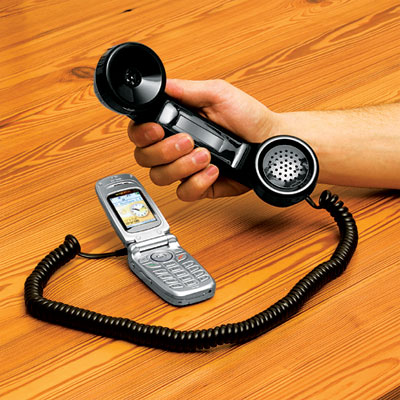 Retro is in.
I like sleek, modern, smooth, elegant things (like my new iPod Nano, for instance), but I have to say, the new mobile phone accessory pictured on the right is sooo cool. A friend of mine got this recently, and he showed it to me before a seminar last week. At first, I didn't quite realise what it was, I thought it was a replacement part for an old phone (he's the kind of guy who just might be repairing and renovating old phones...), but then he plugged it in to his mobile. More comfortable to hold between your ear and the shoulder than the tiny mobile, he says. I think it even came with a USB-adapter, so you could plug it to your laptop and Skype with it...
I'm tempted, this is one of the coolest new gadgets
out there now. :-)
Edit: comes only with a headphone jack, so you'd need to have a splitter to plug it in to the usually separate microphone and headphone jacks in computers... And of course doesn't work with the cell phones that have a "special" headphone plug like Nokia's phones, for instace. It's still cool...
(Pic © firstSTREET)
Wednesday, February 22, 2006
One question per customer
A good lecture stimulates discussion. Thought-provoking ideas are presented, new theories floated, and the audience gets to participate in the question-answer session in the end. The 20+10 -format that is in use in most scientific conferences and meetings doesn't really allow much discussion, especially since most presentations run over their time limit. It is also always the discussion time that gets culled when the whole conference is running late and the organisers are trying to make up the lost time so that the confrence dinner can start on time.
In normal lectures and talks there is more time for the speaker, more time for questions. However, it seems not everyone is familiar with the end-of-lecture question etiquette. Even though the convenor or chair often thanks the speaker and then declares the discussion "open", there are still rules that need to be followed. For a good reason, they don't declare a state of anarchy. The offenders usually fall into the following few categories.
1) Show-offs
These people are most often found in conferences. They feel the need to comment on every single talk they hear and tell everyone how it relates to their work (sometimes stretching it beyond all limits) and how the speaker should read his (yes, these are usually men) latest article on the topic, as it will be published in Nature next month. A subcategory of show-offs are final year postgraduate students who see every conference and lecture as a venue to promote themselves and hope that being thoroughly annoying and making lots of comments, people will be impressed and offer them jobs.
2) alt.lecture.org
These people don't ask questions. They have "a couple of comments and remarks" to make. They want to give an alternate explanation to the speaker's data, or provide an alternative reading to the theoretical background, or just lecture for 10 minutes about their views on the topic.
3) Serial queryists or microphone-hoggers
This is by far the most annoying group. Once given the permission to ask a question, these people think they can keep asking questions until they run out of them. You are only allowed one question or maximum two short questions, and then you need to give other people their turn. These people exploit the kindness of the speakers; when after answering the first question they would politely ask "did that answer your question?", the serial queryists don't just say "yes, thank you very much", but rather seize the opportunity to keep going: "yes, thanks, and now to my second question...".
4) Rude people
There are only two acceptable answers to the above-mentioned "did the answer satisfy you" -question. In other words, it means "that's my answer, take it or leave it", with a slight undertone of "if you think I was unclear we should talk more about this over coffee, but let's move to other things". So, the accepted answers are "Yes, thank you very much" and "For the most parts, yes, but I'd like to continue about this topic over coffee". The latter is strictly reserved for senior scientists. Students have no right to "book" speakers for coffee company. They need to queue to get their turn to exchange ideas (and promote themselves in hopes of being offered a job). Needless to say, some people fail to follow this rule (the annoying show-off postgraduates often break both these rules), and use the rudest possible answer: "Not really, but I guess we don't have more time to go into this now". Which directly points to the fact that the speaker run 2 minutes over in the presentation and the discussion will need to be cut short.
Tuesday, February 14, 2006
Amazing...
 You've seen it in sci-fi films, but now it is reality. The multi-touch interactive screen developed by researchers in NYU. This is absolutely amazing, just check out the video and screenshots!
Hmm, seems like the whole world is trying to see how this thing works, and the video servers are refusing connection. I promise, it's worth trying again...
Monday, February 13, 2006
University Library
Q: What do the University Library staff and terrorists have in common?
A: You can't negotiate with either.
---
Q: What is the difference between University Library staff and terrorists?
A: The terrorists sometimes give the impression they might be willing to negotiate.
---
OK, I admit, it was my fault to return the books late, and to have only £7.50 with me instead of the £7.70 the fines made up. Still, I wasn't too pleased to hear that you have to pay either "all or nothing" of your fines, and as long as you have ANY outstanding fines (be it .20 or 2159.20), you are not allowed to loan any books or renew your loans. So, I needed to run back to the faculty, luckily found the missing .20 in my backpack, run back, and pay the fine, before finally managing to renew the loans. To be fair, they were flexible enough to keep the 7 books I had from various parts of the huge library on the loan desk, so that I didn't have to wait for the day it usually takes them to reshelf those books and then look them up again.
As the keeper of invaluable literary treasures, the UL is very strict about which books can be read where. Also, only a fraction of the books are on the "open stack", and can be taken out of the library. One "patron" is also only allowed 10 books out at once. The most restricted material (apart from the truly old and rare books and manuscripts that you are not allowed to even talk about without a letter of reference co-signed by the vice-chancellor, Queen, and the Archbishop of Canterbury) is delivered on request to the West Room. This material is for example soft-bound journals, pamphlets etc. that are vulnerable for wear and tear.
West Room has a couple of copy machines, for taking copies of the material that can't be taken out of that room. Once I had literally only 3 pages to copy (a short article in a journal), I had come to the UL just for the purpose, and had the material fetched for me. But I wasn't allowed to take the copies, since the person in charge of the room had decided to be absolutely rigid about the shut-down time of those machines 15 minutes before closing time of the room, and the guy using the copy machine before me was truly taking his time... Again, I could have gone there earlier, but since I thought I could do a quick 40 second copy-thingy just about any time, I had left it late. Since she surely saw me waiting there in line for 10 minutes, I would have thought she might have allowed me an extra minute or two, but I guess it wasn't my day.
To be fair, the staff in the UL are really good in finding the stuff you need among the 7 million + items they have in stock. And if they don't have it, they can get it from elsewhere. And they are genuinely helpful if you have an intellectually challenging data-mining operation you need their help for. But when it's about something mundane and boring like photocopying or renewing loans, the statutes start to speak through them, and it's all rules and policy from there on.

Happy happy joy joy...
People often perceive us Finns as being quiet, inwardly people with a more-than-latent tendency for depression. Quite accurate, I'd say. This is now also confirmed in a popular poll in Finland.
The three most popular songs in Finland in 2005 were (my translations): "I'm Falling", "It Didn't Go Like That" and "Let's Cancel the Wedding". None of that artificial pseudo-happy have-a-nice-day -rubbish for us. :-)
Friday, February 10, 2006
Supervision
 What makes Cambridge education special? Apart from the opportunities to row (to row as in 'row, row, row your boat', not as in 'row with your parents over bedtimes') it must be the emphasis on one-to-one and small group teaching. For all of the 'papers' the undergraduates take, they are assigned a supervisor; someone whose responsibility it is to make sure the students do their homework and learn the things they need to for that paper. The supervisors make the students write essays, give presentations, quiz them about the reading, organise mock exams (to perfect that "Cambridge exam answer" style) and in general ensure that they have understood the lectures given by the professors and lecturers. The supervisions usually take place in groups of 1-8, 3 or 4 being the typical group size.
Interestingly, organising this supervision (and paying for it) is in the responsibility of the colleges, not the departments who provide the lectures. Usually, it is the more junior members, junior fellows, post docs, and postgraduates who give the supervisions, since it is a bit tedious and has to do with going through the basics over and over again, correcting essays etc. Plus, the postgrads and postdocs never say no to extra income...
Since small-group supervisions are the bedrock of Cambridge academic excellence, you can imagine me being not just a little scared when I was asked to start giving supervisions myself a year ago. Coming from a system that is completely different, I had no idea what the supervisions were about, but was nevertheless very keen to get involved. In Finland we had "small group teaching" only when the course was so obscure nobody was interested in it. I went through many courses in my MA by just emailing the professor once to let him/her know I'm going to take the book exam, and the only reply I got was the grade after it was all done.
In Cambridge, I had had supervisions with my own PhD supervisor, but those were always one-to-one and about my project, not about any course or lecture. So graduate supervising (which exists in Finland as well) has nothing to do with undergraduate supervision. Having never sat a Cambridge examination, I also had no idea on how "demanding" I should be. I didn't know whether the students were expected to be argumentative (which of course is the general Cambridge style) and how much detail they needed to know to support their argumentation (essentially, what's the balance between content and rhetorics). Since the topic of the paper was linked to natural science, I had to also find out how much of the physics and equations etc. I could demand from the poor humanities students. I got some very good tips and instructions from my own supervisor, who was the lecturer of that paper, but eventually had to just follow my instincts.
The university organises courses for new supervisors, but the content of these seems to be geared for people who don't have a clue about or ability for interpersonal communication. I skipped the course, because having chaired and attended literally hundreds of meetings I didn't think those would be the problematic issues for me. There was no course where the international postgrads would get a in-a-nutshell -introduction to the British education system, Cambridge examinations and course requirements. That I would have attended.
In the first supervision I was petrified. Not so much because I felt I didn't know what I was talking about, since I had spent countless hours preparing myself and reading the course reading list in advance (something I've now learned is not the usual practice...), but because they seemed to believe every word I said, and even worse, were writing them down!
Much of the material on that course (in which I'm supervising again this year, much more confidently, and needing about 10% of the preparation time I did last year) was very basic, in fact so basic that I hadn't looked at it since my very first undergrad years 10 years ago. So I needed to do a lot of work to check my facts, read the material and re-learn the things properly myself. I truly agree with the old saying that you don't really know anything until you've taught it to someone else. Teaching something means that you need to be exact with your terminology, know all its connections to other areas, have an idea of the relevance of it and finally, you need a way to express yourself accurately and clearly. Plus, I found out, it's great fun.
At least with motivated and smart students. I've been lucky, since all the people I've had the pleasure to supervise, have been just that. Some seem to rely more on their wits than hard work, while others are so engaged with extracurricular activities that they have very little to no time to do their assignments "properly". But I think these are fair enough excuses, as long as the student shows progress. Students need to live and experience things as well as learn the books, I think.
So, teaching is fun and useful. Also time-consuming if you want to do it properly. And I think it would be extremely irresponsible not to. Even though the exam marks are not the most important thing in the world, they have an effect on people's future opportunities. Giving people the chance to do their best in the exams is what supervisions are for. You can't do anyone's work for them, but you can motivate them to put the necessary effort in, and by giving good feedback you can help them improve.
And as a postgraduate student I need supervision as well. My supervisor is a star, and has helped me immensely to get where I am now. He has opened my eyes in many ways. But still, perhaps the best individual piece of feedback I ever got, was earlier this week from a visiting professor. He had come to see my talk (the story below), didn't like it, and wanted to give me personal feedback over lunch. I'm still analysing his feedback. Not so much for the content of it, since it was clear enough. (And as I said, I sort of try to forget the talk...)
What was stunning was the way he gave his feedback. It was so constructive: even though his evaluation of the talk was negative, his feedback sounded positive. He wasn't trying to find the positive things in the talk, since there weren't many, but he focused on things I should do differently next time. He was analysing the kinds of audiences I might encounter, the relevant points in my research for those groups, and how the talk could be structured so that it would better reflect the interesting aspects of my research (which he likes very much). I really, really appreciate the time he gave me, and the honest, direct, even blunt feedback. It all seems so clear now. I now know what kind of a talk I would give next time around. Even more clearly, his comments showed me what kind of a supervision and feedback I'd like to learn to give myself.
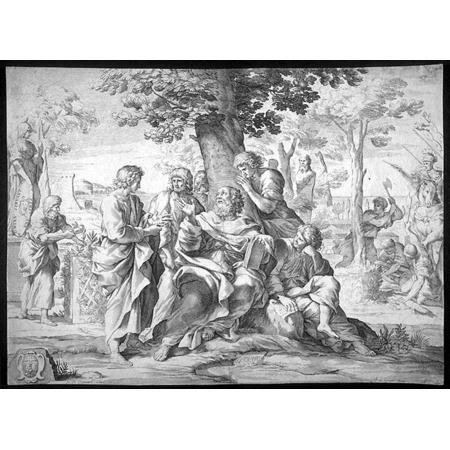
(Picture: Johann Friedrich Greuter: Socrates and his students)
Thursday, February 09, 2006
LEGO difference engine
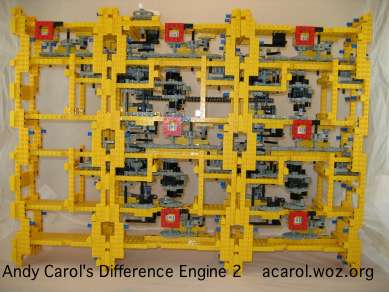 A couple of weeks ago I wrote about Charles Babbage's difference engine in Science Museum. And today I found out that Andy Carol has built a similar thing, using LEGO. These things always make me smile. I used to play a lot with LEGO as a kid. But I never felt like building difference engines or harpsichords out of them, though. (EDIT: there's one made of Meccano as well...)
These small building blocks offer limitless possibilities, and while the basic blocks are - well, "blocky", the creative and imaginative minds of children will smoothen out the rough edges and turn the lumps of cubes into sleek spaceships, ray-guns and supercars, houses, castles and treasure chests.
A friend of mine was looking for a birthday present for a nephew of hers, and I suggested LEGO. Unfortunately it seems that all they have in local toy shops were some LEGO Bionic monsters and such. What happened to the sets of basic blocks and the more generic cars, ships, planes etc.? If I wanted teenage idiot ninja mutants I would probably go and get them, but since when did LEGO get involved in this shoot-explode-bang-bang ADHD-inducing no-concentration-what-so-ever -lunacy?
The great thing about the old sets was that you would build the "intended" thing, a plane or a car, just once. Then you'd take the thing apart, and add the pieces to your big box of LEGO, where they would get a new life. As long as the blocks were generic enough, and could serve many purposes. The idea was always in the blocks, not in the pre-determined particular way of putting them together to form the thing in the cover of the box. That's why LEGO was always such a perfect gift, it could never fail. Sometimes there were exciting special parts in the boxes, that would be adopted for something completely different just seconds after the original model was built. The propeller was soon stripped of its wings, because the rest of the part looked like a jet, and jet engines are cooler than propellers. Antennas would be used as swords for LEGO men. Roof tiles became spoilers for supercars.
To all the LEGO people out there: don't ruin the whole idea, stop pre-determining and overdefining the sets, blocks and designs.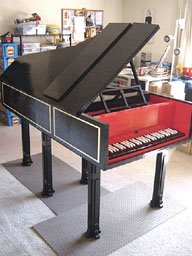
(Pics: Andy Carol & Henry Lim)
Around the world - and beyond! (to Kent)
 Steve Fossett is on his way with the Virgin GlobalFlyer. He is trying to fly further than any other plane, around the world once and then cross the Atlantic ocean and finally land in England, in Kent.
For a normal, even a frequent flyer, crossing the Atlantic is just about long enough haul. Steve (age 61), however, is planning to circumnavigate the globe for a warm-up before that. And while I don't need to spend 80 or even 8 hours in a plane to complain about abysmal airline food and lack of leg space, Fossett is crammed into the tiny cockpit with nothing but milkshakes to eat/drink.
On the other hand, I bet he doesn't have to wait worriedly for his luggage to arrive, or spend hours in customs or passport control queues. Also, he probably has a car to pick him up from the airport and so he misses the fun of trying to get onto a bus or a train with suitcases and bags. He will probably miss the opportunity to buy tax-free goods, but I'm sure that if he really likes the calendar-torch-pen or miniature jumbo that are usually for sale in Virgin Atlantic planes, his buddy Richard can send one for him.
The plastic wing with fueltanks is at this moment entering Africa.
Friday, February 03, 2006
Presentation
 Phew. Had to give a talk in the faculty colloquia series. This is a series of weekly talks by invited speakers and our own graduate students. The audience is mostly from our faculty. This sounds nice enough, familiar crowd and so on. Unfortunately, I'm in a "special" branch of the faculty that does very different things from the rest of the people. And there is not much communication in between the two "camps", since there aren't many commonalities: approaches, methods, backgrounds etc. are all very different. Typically for an academic institution, there's actually more or less open hostility between the two groups.
So I knew that it would be a tough crowd. There are a couple of professors of the "dark side" who take pride in their total ignorance of and contempt for the work we do. There's only one correct way to do research: theirs. Anyway, I like to provoke ignorant people and enjoy the challenge of being put to the spot. But it is very, very difficult to prepare a presentation that would be general and approachable enough so that the audience would get something from it, but also detailed enough to qualify as an academic talk. And my problem is, and will always be, the multidisciplinary framework: writing a catchy story is difficult, when you need to visit and revisit so many different starting points and theories.
I think I did reasonably well with the structure. There was a bit of repetition, and I forgot to mention one crucial thing, but other than that, it was all right. I started with a silly joke and ended with the picture I posted above.
But I am not happy about how the thing in between went. I was finished with preparing the presentation too late to have a proper run-through before the actual lecture, so I found myself babbling senselessly every now and then. A couple of times, the PowerPoint surprised me by bringing up a slide I didn't remember including... Also, I said things too vaguely and lost all the elegance and nice formulations of sentences I had in mind when preparing the talk.
On the other hand, surprisingly, I kept time very well. I usually run over. And I answered most questions well, which I knew I would do. Also, I have to say that apart from one demonstration of ignorance, the questions were pretty good.
But, as an overall grade, I'd have to give myself a low pass. I didn't want to write this entry yesterday, because I was too mad about the whole thing, and would have used my annual quota of curse words before finishing the first paragraph.
I got polite, positive feedback from people, but I can tell when the feedback is positive for politeness, and when it is genuine. And I hate, absolutely hate to "underwhelm" people. Many of my colleagues (both from "my" side of the faculty and the other) said beforehand that they were really looking forward to my talk, and I feel I disappointed them. But mostly, I disappointed myself, since I know I can do so much better. I didn't get the nice feeling of being in control of the crowd, and providing them with something they can relate to, but also surprises them and makes them see things in another light. I felt they left with having just listened to another talk, and not with a better understanding on how we do things on our side, and perhaps an idea of how they could use that n their work.
I think I had a bit of an attitude problem, I took this lecture as a "necessary evil" and left the preparation too late. The lack of rehearsal was an amateur mistake, and I'm not professional enough as a public speaker to compensate for lack of preparation.
But then again. I'm being very hard on myself here, as there were good things in it, and it wasn't a disaster or anything. It's just the discrepancy between expectations and delivery. I'm used to having it the other way around, delivering more than people expect, and now swinging to the other direction was not fun at all. But now the "necessary evil" is behind me, I survived it, and can go on with my work. And make a real killer of a presentation next time around.
Wednesday, February 01, 2006
Onni on...
...megapitkän työpäivän jälkeen, jääkaapin ammottaessa tyhjyyttään, pakastimen perukoilta löydetty, ystävän aikoinaan Suomesta tuliaisiksi tuoman RUISLIMPUN neljännes. Kiitos!
(Can't be translated. At any level. Sorry. :-) )